

There are some of those particular natural phenomena that only nature can dish out, changing the atmosphere in a matter of seconds. The morning can seem to be so pleasant and tranquil, and as quickly as it happened, the wind begins to whip around. The air takes on a distinctly cooler feel, trees can be seen dancing around their bases while dust swirls lazily on roads, and enjoyable walks will suddenly have to be brought to a hasty and cold end.
However, so what constitutes a ‘windy’ day? Is every breezy moment in your life classed as windy? Where does ‘windy’ become a gale force?
If you can answer these types of questions with confidence, you will then be able to make better decisions regarding transport, outdoor pursuits, apparel for working outdoors, etc., growing certain crops, and your general safety.
Table of Contents
What Is Windy Weather?
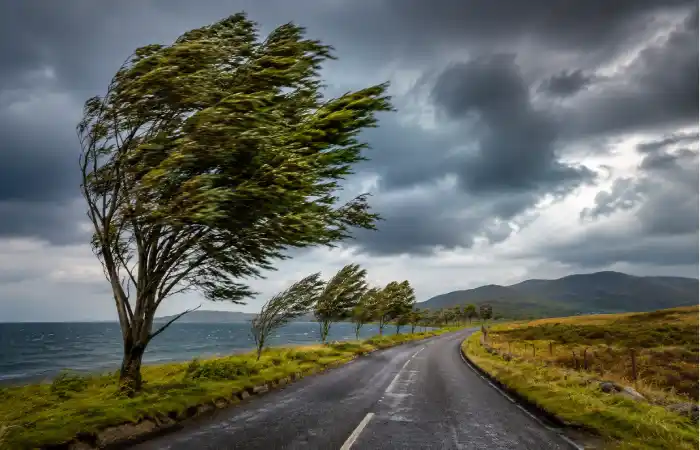
Windy weather is a situation in which air is moving discernibly and steadily from one place to another. Differences in air pressure are the main source of wind. Air moves naturally from high pressure to low pressure, generating wind.
A light breeze on a hot afternoon feels nice. But strong winds may cause unpleasantness, and these could be blowing dust and can interfere with transportation and also property, or they can make walking and cycling not fun at all.
No particular wind speed officially qualifies as ‘windy’; it’s an entirely contextual term. What feels ‘quite windy’ in a sheltered city will feel less so in an exposed coastal environment.
Colloquially, the term implies wind strong enough to feel obvious beyond the perception of being a barely tangible phenomenon.
How Does Wind Form?
Here is the most basic explanation for how wind works. It starts with the sun.
It does not heat all of Earth’s surface to the same extent. Land will have different heating rates than the sea, but houses can be much hotter than fields, as they retain and emit heat better.
Warm air rises, and cool, dense air moves in to replace it, creating areas of lower and higher pressure and a pressure difference; then air moves from the area of higher pressure towards the area of lower pressure.
The bigger the pressure difference is over a given distance, the higher the wind velocity will be.
Earth’s movement is what moves large-scale winds in directions on Earth and is called the Coriolis effect; large-scale winds are influenced by the shape of the Earth, and local effects, such as valleys, mountains, and coastlines, could influence directions and regular breezes such as sea breezes and land breezes.
Windy Weather vs. Breezy Weather
Most people mix the words breezy and windy as meaning the same thing, although it isn’t exactly right.
‘Breezy’ generally means a fairly gentle, perhaps pleasant wind which you can clearly feel. ‘Windy’ usually suggests an amount of wind or strong wind and perhaps also for a sustained time.
| Feature | Breezy Weather | Windy Weather |
| Wind strength | Usually light to moderate | Moderate to strong, sometimes very strong |
| Outdoor comfort | Often comfortable | Can become uncomfortable |
| Effect on trees | Leaves and small branches move | Larger branches may sway |
| Effect on walking | Usually minimal | Can make walking difficult |
| Travel impact | Usually limited | May affect driving, cycling, flights, or boats |
| Safety concerns | Generally low | Can increase with stronger gusts |
The distinction is not absolute. Weather services generally use measured wind speeds and specific terminology rather than relying only on everyday descriptions.
Common Causes of Windy Weather
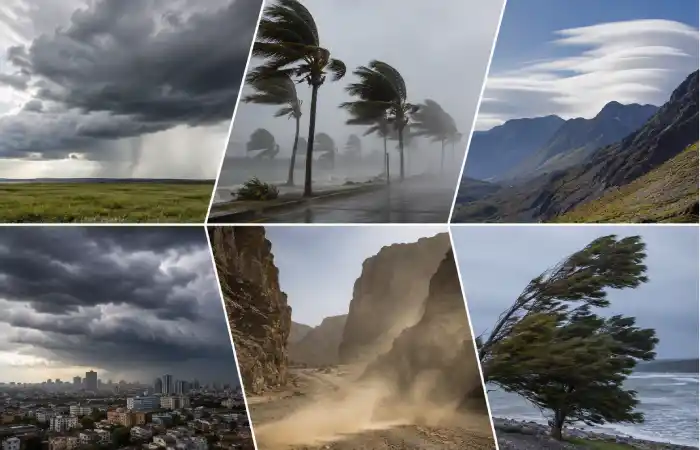
Windy conditions can develop for many reasons. Sometimes the cause is a large weather system, while at other times it is a local effect.
-
Differences in Air Pressure
The biggest factor responsible for causing wind, however, is atmospheric pressure. The pressure gradient between regions of high and low pressure can increase, resulting in stronger winds.
Thus, it is evident that changing weather conditions can bring windy weather
2. Storm Systems
Hurricanes, tropical cyclones, and thunderstorms have a powerful impact on the winds. You cannot always have a thunderstorm directly above your house to have high winds, as the pressure gradient around the weather system can have high speeds over a large region.
Strong gusts of wind can occur during severe thunderstorms and can be more harmful than the precipitation.
3. Temperature Differences
Large temperature variations create greater pressure differences. Large temperature contrasts cause stronger atmospheric pressure differences. When cold air begins to settle in an area of warm air, this creates weather conditions that may create higher winds.
4. Coastal Effect
Sea and land breezes are generally seen in coastal areas and are created by temperature differences between land and water. Thus, from the water surface across the land, a sea breeze is formed by air above that water area. At night, on the other hand, it can form a land breeze.
5. Mountains and Valleys
The geography of the area can significantly impact the winds. Valleys and mountain passes are often the result of natural tunnels for airflow. In these areas, you’ll often find that the winds are much more forceful than in the surrounding landscape. Another wind that can be very powerful on occasion is downslope.
6. Seasonal Weather Patterns
Certain places have prevailing winds in specific regions of the year. Such natural changes include pressure systems, different climates, and changing temperatures, storm conditions, as well as the pat of local winds that contribute to these andertaipatternsns. This causes people to get used to conditions and winds in specific seasons.
What Does Wind Speed Tell You?
Wind speed is a method that can scientifically determine if it is windy. Therescientific measure that indicates whether/h (kilometers per hour), mph (miles per hour), m/s (meters per second), or knots, depending on the country that you are getting your wind from and whoever is producing the reports of the wind. Wind speed and wind gust speed are different.
‘Sustained’ wind speed refers to how fast the wind is blowing generally throughout a certain measurement period; gusts refer to brief increases in speed.
An example would be to see moderate sustained wind, with moderate or high gusts. Those gusts are critical for things like driving, cycling, construction work, flights, outdoor events, etc.
Why Does Wind Make It Feel Colder?
A good example of wind that produces such effects is the cooling effect wind has during cold conditions. Your body is constantly losing heat into the atmosphere. The airflow can strip away the narrow layer of warmer air immediately around your skin more efficiently than air that is not moving, and this increases heat loss. You should bear in mind that the temperature of the air doesn’t actually fall, but is felt to be lower by people due to greater loss of heat from the body to that temperature; loss that may pose a risk under severely cold conditions in the form of cold injury or a cold disorder.
Effects of Windy Weather on Everyday Life
Wind can be helpful, inconvenient, or dangerous depending on its strength.
The cooling is called wind chill or wind-cooling. Please be aware that it does not decrease the temperature of the air but is perceived to be colder; it feels lower than the actual temperature. A more serious potential consequence of significant heat loss is a cold injury.
Transportation
However, depending on the method of transport, wind may have differing effects; cyclists may find they are exerting much more energy going against a stiff headwind.
Sudden gusts could blow a motorcyclist into lanes of traffic or on a sideways bearing, while buses and lorries with greater profile are more susceptible to being affected by side winds. Likewise, sailing, of course, relies almost exclusively on wind.
Agriculture
There are beneficial and detrimental impacts of the wind on crops. Light air can be beneficial as it helps plants breathe, and it assists in drying the plant as well as can help in pollination for particular plants.
More than that, strong winds cause branches to break, damage crops, and increase the rate of soil and water loss by enhancing evaporation from the surface and from plant surfaces as well.
Buildings and Property
Buildings, roofs, signs, fences, trees, and other structures could be subjected to heavy stress under the strongest wind conditions. The degree of exposure will depend not only on the wind, but also on the structural properties.
Loose objects outdoors pose a particular hazard to life and property in high winds, as they can be blown around or swept through the air.
Is Windy Weather Dangerous?
Not necessarily.
Mostly windy days are just another kind of weather. Risk is related to the speed of wind, force of gust, how long it continues, topography around where you are, items around you, etc. In addition to wind conditions.
However, this level of riskvaries depending onh other conditions, such as thunderstorms, rain, snow, wildfire weather, coastal flooding, and so on.
One major factor is how the environment appears. For example, 50 miles per hour wind in an empty field may not be as risky as the same wind through a town crowded with houses and temporary shelters. People are expected to listen to weather warnings when severe wind conditions are forecasted.
How to Stay Safe During Strong Winds
When windy conditions become severe, a few simple precautions can reduce unnecessary risks.
Stay Indoors When Conditions Are Dangerous
If authorities issue a severe wind warning, avoid unnecessary outdoor travel.
Windows and doors should be secured, particularly if strong gusts are expected.
Secure Loose Objects
Garden furniture, lightweight decorations, umbrellas, tools, bins, and other loose objects can be moved or damaged by strong winds.
Bringing them indoors or securing them before severe weather arrives is a sensible precaution.
Be Careful Around Trees
Avoid standing or parking directly beneath large trees during periods of strong wind.
Branches can break unexpectedly, particularly when trees are already weakened by disease, age, previous storms, or saturated soil.
Drive Carefully
Strong crosswinds can affect vehicle control, especially on bridges, open roads, and exposed highways.
Drivers should reduce speed when conditions require it and maintain a safe distance from other vehicles.
Avoid Damaged Power Lines
Never approach a fallen or damaged electrical line.
Even when a line appears inactive, it may still be energized. Keep a safe distance and contact the relevant emergency or utility service.
Windy Weather and Renewable Energy
Wind power is not only in your lives but also a major source of renewable energy. Wind power uses wind turbines to convert the kinetic energy generated by moving air into electrical energy.
Modern wind energy generators have been created to extract as much power as is achievable from air streams as feasible.
A wind farm may consist of lots of wind turbines working on your shore and off your shores. But when the wind is not strong sufficient there might not be sufficient electrical energy coming, and when the wind gets extremely strong, power then turbine should be switched off. This shows us that the wind is neutral whether bad or good – it matters depending on strength, site, and also the way it is regulated.
Windy Weather Around the World
Wind patterns differ massively from one part of the country to another. In Coastal Regions, it’s possible to get daily wind patterns. In mountainous areas, you can get a local blast of air.
Open Plains might suffer from a lot of turbulence in the air, as there aren’t as many things for the wind to hit.
Certain regions are bound to be windy due to atmospheric conditions and terrain, and some won’t be so much. Climate also plays a role in longer-term trends of wind, but an individual windy day is dominated by weather in the immediate term.
Wind Forecasts: What Should You Look For?
When checking a weather forecast, don’t look only at the temperature.
For windy weather, pay attention to:
- Wind speed: The general expected speed of the wind.
- Wind direction: The direction from which the wind is coming.
- Wind gusts: Short periods when the wind may become significantly stronger.
- Weather warnings: Official alerts for potentially hazardous conditions.
- Duration: How long the windy conditions are expected to continue.
- Other hazards: Rain, thunderstorms, extreme heat, snow, flooding, or poor visibility.
For outdoor plans, gusts can sometimes matter more than the average wind speed.
Windy Weather vs. Other Weather Conditions
Wind rarely exists in isolation. It often interacts with other elements of the atmosphere.
| Weather Condition | How Wind Can Change the Experience |
| Hot weather | May provide cooling but can increase evaporation. |
| Cold weather | Can make conditions feel significantly colder |
| Rain | May make rain feel harsher and reduce visibility |
| Thunderstorms | Can create sudden, potentially dangerous gusts |
| Snow | Can contribute to blowing snow and reduced visibility |
| Dry weather | Can lift dust and increase fire-weather concerns |
The combination of weather conditions is often more important than wind alone.
Final Thoughts
But windy weather is more than just “ air moving fast .” In reality, it’s the visible result of the complex interplay among pressures, temperatures, geography, landforms, Earth’s rotation, and prevailing weather patterns. For example, the gentle breezes you may feel on a hot summer afternoon, driven by uneven temperatures, might offer an escape.
Strong winds might help generate electricity from renewable sources, drive storms across the nation, and alter geological features.
Yet strong winds also pose obvious threats.
Also Read: https://www.beautyation.com