
Table of Contents
Introduction
Vitamin E is a fat-soluble nutrient known for its antioxidant properties. It plays an important role in protecting cells from oxidative damage and supporting normal skin and body functions. It is also widely used in hair-care products, oils, and cosmetic preparations.
Vitamin E is often promoted as an ingredient that can improve hair growth, strengthen hair, moisturise the scalp, and add shine. However, scientific evidence supporting many of these claims is still limited, and further research is needed to establish its direct effects on hair growth and scalp health.
Vitamin E can be obtained through foods, dietary supplements, and topical hair-care products. Each method has different benefits and precautions.
In this article, we explore the potential benefits of vitamin E for hair, how to use it, its natural food sources, and possible side effects.
Potential Benefits of Vitamin E for Hair
Vitamin E is associated with several potential benefits for skin and hair care. Here are some of the most commonly discussed benefits.
1. May Help Protect Hair from Oxidative Stress
Vitamin E acts as an antioxidant, helping protect cells from damage caused by free radicals.
Oxidative stress has been investigated as one of several factors that may contribute to hair and scalp problems. Because vitamin E has antioxidant properties, researchers have explored whether it may support scalp health and hair growth.
A small study published in 2010 investigated tocotrienol supplementation in people experiencing hair loss and reported improvements in hair count among participants.
However, this research does not establish that every vitamin E product or topical oil can prevent hair loss. More studies are needed to confirm its effectiveness.
2. May Support Scalp Health
Vitamin E is used in some skincare and hair-care products because of its antioxidant and moisturising properties.
Topical products containing vitamin E may help support the skin’s moisture barrier and reduce dryness in some individuals.
However, there is insufficient clinical evidence that applying vitamin E directly to the scalp improves blood circulation or stimulates hair follicles.
3. Helps Moisturise Hair
Vitamin E oil is commonly included in conditioners, hair masks, and other cosmetic products.
Oils containing vitamin E may help coat the hair shaft and reduce moisture loss, making hair feel softer and smoother.
This may be particularly useful for people with dry or rough hair. However, the moisturising effect often comes from the oil formulation as a whole rather than vitamin E alone.
4. May Improve Hair Shine
Dry and damaged hair can appear dull because the outer cuticle becomes rough or uneven.
Conditioning products containing vitamin E and suitable oils may help smooth the hair surface, improving its appearance and shine.
Regular conditioning and gentle hair handling are also important for maintaining healthy-looking hair.
5. May Help Reduce Hair Breakage
Hair that lacks adequate conditioning can become brittle and more vulnerable to breakage.
Vitamin E-containing oils and conditioners may help improve softness and reduce friction during combing.
However, vitamin E has not been proven to repair damaged hair permanently or prevent all forms of hair loss.
How to Use Vitamin E for Hair
Vitamin E can be included in a hair-care routine through food, supplements when medically appropriate, or topical products.
Here are some common ways to use it.
1. Vitamin E Supplements
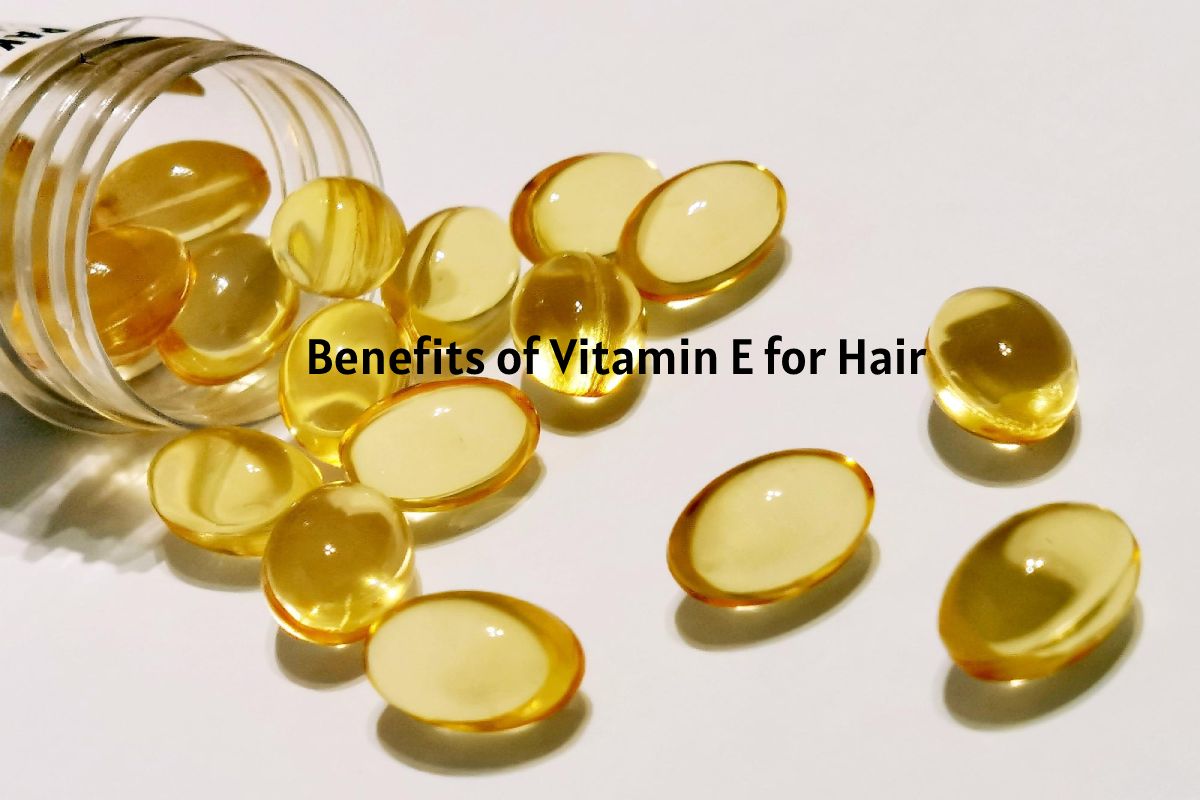
Vitamin E supplements are available in capsules and other formulations. However, most people can obtain sufficient vitamin E through a balanced diet.
Vitamin E deficiency is relatively uncommon in healthy individuals, and supplements are not routinely recommended for hair growth.
Before taking supplements, consider the following:
- Avoid taking high doses without medical advice.
- Check whether you already receive vitamin E through other supplements.
- Speak with a healthcare professional if you take blood-thinning medication.
- Do not assume that supplements will reverse hair loss.
A healthcare professional can help determine whether supplementation is appropriate based on your diet, health, and individual needs.
2. Apply Vitamin E Oil to Hair
Vitamin E oil is commonly used in cosmetic hair-care routines. Because concentrated products may feel heavy or irritate sensitive skin, choose a suitable formulation and follow its instructions.
How to use:
- Choose a commercially formulated vitamin E hair oil or a suitable product designed for topical use.
- If the product requires dilution, mix it with an appropriate carrier oil according to its instructions.
- Test a small amount on a limited area of skin before wider application.
- Apply a small quantity to dry hair or the ends of your hair.
- Leave it on for the period recommended by the product manufacturer.
- Wash it out with a suitable shampoo if necessary.
Avoid applying concentrated vitamin E directly to an irritated or broken scalp. Stop using the product if you experience itching, redness, or swelling.
3. Avocado and Banana Hair Mask
Avocado and banana are commonly used in homemade hair masks. Avocado contains vitamin E, while both ingredients provide a soft texture that can help condition the hair.
Ingredients:
- 1 ripe avocado.
- 1 ripe banana.
- 1 tablespoon of avocado oil.
- A small amount of coconut oil.
- 1 teaspoon of honey.
Preparation and application:
- Peel the avocado and banana.
- Place them in a blender.
- Add the avocado oil, coconut oil, and honey.
- Blend until the mixture becomes smooth.
- Apply the mask to clean, damp hair, concentrating on the lengths and ends.
- Leave it on for approximately 20–30 minutes.
- Rinse thoroughly with lukewarm water and use shampoo if needed.
Avoid applying the mask if you are allergic or sensitive to any of its ingredients. Homemade masks should be prepared fresh and discarded after use rather than stored for extended periods.
4. Use Vitamin E-Rich Hair-Care Products
You do not necessarily need to prepare homemade treatments to include vitamin E in your hair-care routine.
Some conditioners, hair oils, masks, and leave-in treatments contain vitamin E or its derivatives.
When selecting a product:
- Check the ingredient list.
- Choose products suited to your hair type.
- Avoid ingredients that have previously caused irritation.
- Follow the manufacturer’s application instructions.
Natural Food Sources of Vitamin E
A balanced diet is one of the best ways to obtain vitamin E. Several everyday foods contain this nutrient.
1. Nuts and Seeds
Nuts and seeds are among the useful dietary sources of vitamin E.
Examples include:
- Almonds.
- Sunflower seeds.
- Hazelnuts.
- Peanuts.
- Sunflower seed butter.
2. Vegetable Oils
Certain vegetable oils contain significant amounts of vitamin E.
Examples include:
- Sunflower oil.
- Wheat germ oil.
- Safflower oil.
- Olive oil.
Use oils in appropriate quantities as part of a balanced diet.
3. Leafy Green Vegetables
Some leafy vegetables provide vitamin E along with other important nutrients.
Examples include:
- Spinach.
- Swiss chard.
- Beet greens.
- Broccoli.
4. Avocados
Avocados contain vitamin E, healthy fats, and other nutrients. They can be included in salads, sandwiches, and other meals.
5. Fortified Breakfast Cereals
Some breakfast cereals are fortified with vitamin E and other vitamins and minerals.
Check the nutritional label to understand the amount provided in each serving.
Recommended Vitamin E Intake
Vitamin E requirements vary depending on age and certain life circumstances.
For most adults, the recommended dietary allowance is approximately 15 mg of alpha-tocopherol per day. Breastfeeding adults generally require 19 mg per day.
Most people can meet their daily requirements through a varied diet.
Taking more vitamin E than recommended does not necessarily provide additional hair benefits. High-dose supplementation can also increase health risks.
Possible Side Effects of Vitamin E for Hair
Vitamin E is generally well tolerated when obtained through food. However, topical products and high-dose supplements can cause unwanted effects.
1. Skin Irritation and Allergic Reactions
Some people may develop itching, redness, swelling, or a rash after applying vitamin E products.
Topical vitamin E can cause contact dermatitis in susceptible individuals.
Perform a patch test before using a new product and discontinue it if irritation develops.
2. Greasy Hair and Scalp Buildup
Applying excessive amounts of vitamin E oil may make hair feel greasy or heavy.
People with naturally oily scalps may find concentrated oils uncomfortable or difficult to wash out.
Use a small amount and avoid applying more product than necessary.
3. Increased Bleeding Risk from High-Dose Supplements
High doses of vitamin E supplements can interfere with normal blood clotting and increase the risk of bleeding.
This is particularly important for people who take anticoagulants or antiplatelet medicines.
Consult a healthcare professional before taking vitamin E supplements if you use these medications or have a bleeding disorder.
4. Other Risks of Excessive Supplementation
Vitamin E is a fat-soluble vitamin, meaning it can accumulate in the body.
Excessive supplementation may cause unwanted effects, including:
- Nausea.
- Diarrhoea.
- Abdominal discomfort.
- Increased bleeding risk.
Some research, including a large clinical trial in men, found an increased risk of prostate cancer associated with long-term vitamin E supplementation at a specific high dose. This finding should not be interpreted as proof that vitamin E from ordinary foods causes prostate cancer.
There is no established evidence that normal dietary vitamin E intake causes osteoporosis or inhibits thyroid hormone production.
Tips for Maintaining Healthy Hair
Vitamin E is only one part of a broader hair-care routine. Other habits can also help maintain healthy-looking hair.
- Eat a balanced diet containing adequate protein, vitamins, and minerals.
- Avoid excessive heat styling.
- Use suitable conditioners and moisturising products.
- Avoid aggressive brushing and tight hairstyles.
- Keep the scalp clean without excessive washing.
- Protect hair from unnecessary chemical and environmental damage.
- Seek professional advice if you experience persistent or unexplained hair loss.
People with curly or textured hair may need additional conditioning and moisture-focused care. You can explore our guide on how to moisturise curly hair for more practical hair-care ideas.
Understanding Hair Growth and Hair Treatments
Many people look for ways to make their hair grow faster. Although healthy nutrition and gentle hair care support normal hair health, hair growth speed is largely influenced by genetics, age, hormones, and overall health.
For more information, read our article on how to grow hair faster naturally in a week.
It is also important to understand that not all hair treatments are designed to improve scalp or hair growth. Some procedures focus on removing unwanted body hair, while others chemically change the hair’s structure.
For example:
- Hair relaxers use chemical formulations to alter the natural structure of hair. Learn more about the hair relaxer lawsuit.
- Laser hair removal is a cosmetic procedure designed to reduce unwanted hair growth on the body. Explore the possible side effects of laser hair removal.
- Sugaring is another hair-removal method that uses a sugar-based paste. Read our guide to sugaring for hair removal and what to know about the procedure.
These procedures have different purposes from vitamin E hair-care treatments, so it is important to choose products and services according to your specific needs.
Conclusion
Vitamin E is an important nutrient with antioxidant properties that support normal skin and overall health. It is also commonly included in hair-care products because of its potential moisturising and conditioning benefits.
Vitamin E-containing oils and hair masks may help improve hair softness, reduce dryness, and add shine. However, there is limited clinical evidence that vitamin E directly stimulates hair growth or prevents hair loss.
Most people can obtain sufficient vitamin E through foods such as nuts, seeds, vegetable oils, leafy vegetables, and avocados. Supplements are not necessary for everyone and should be taken only when appropriate.
For healthier-looking hair, combine a balanced diet with gentle cleansing, suitable conditioning, and careful styling. If you experience persistent hair loss or scalp problems, consult a qualified healthcare professional to identify the underlying cause.