
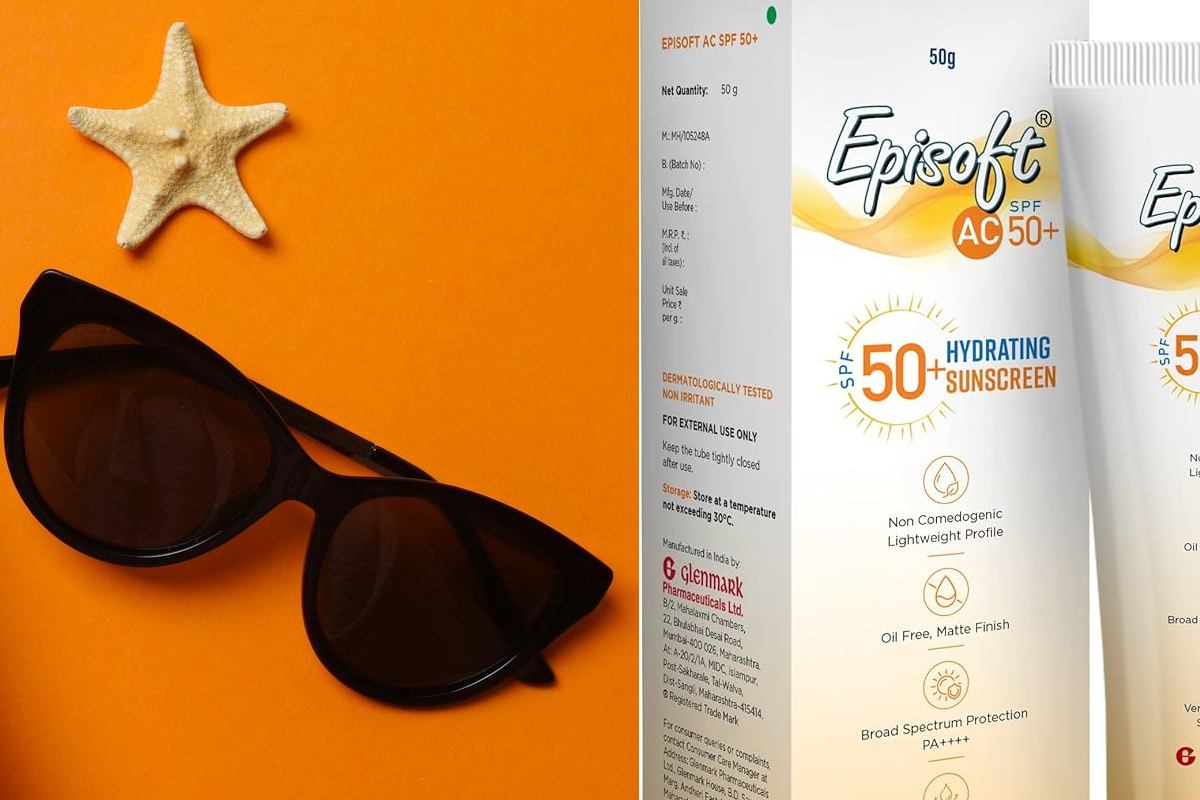
Episoft sunscreen is a dermatologist-recommended, microencapsulated broad-spectrum formula available in SPF 30 and SPF 50+ variants. It’s ideal for sensitive, acne-prone, and combination skin. It moisturises and protects simultaneously, leaves no white cast, and suits daily use in India’s high-UV climate. Not the best fit for very dry skin types craving richer hydration.
If you’ve ever Googled “sunscreen for sensitive skin India” or “dermatologist-recommended sunscreen acne” and landed on Episoft, you’re not alone. This sunscreen quietly earned a loyal following — not through big marketing, but through dermatologist prescriptions.
But what actually makes Episoft sunscreen different? Is the SPF 30 version enough for Indian summers? And is it worth the price compared to drugstore alternatives?
This guide answers all of that — ingredient by ingredient, variant by variant.
Table of Contents
What Is Episoft Sunscreen? (The Simple Definition)
Episoft sunscreen is a dermatologist-tested, broad-spectrum photoprotective moisturiser that uses microencapsulated UV filters to deliver sun protection without directly exposing the skin to raw chemical actives.
In plain language: the sunscreen agents are wrapped inside microscopic capsules. These capsules release the active ingredients slowly and in a controlled manner — reducing irritation, improving stability, and delivering more consistent protection throughout the day.
It’s manufactured under the Glenmark/Dermatics umbrella and is available by prescription as well as OTC in India.
The Two Main Episoft Variants
Before reviewing the formula, you need to know which variant you’re looking at. Episoft sunscreen comes in two major versions:
Variant 1: Episoft AC SPF 30 — The Moisturiser-Sunscreen Hybrid
This is the classic, widely prescribed version. It’s a 2-in-1 moisturiser and sunscreen designed for acne-prone and sensitive skin.
- SPF 30 (blocks approximately 96.7% of UVB rays)
- Fragrance-free, paraben-free
- Non-comedogenic, oil-free
- Available in 75g tubes
Variant 2: Episoft AC SPF 50+ — The Upgraded Shield
The newer, more advanced version for people who need heavier-duty protection.
- SPF 50+ with PA++++ rating (broad-spectrum UVA + UVB)
- Delivers broad-spectrum protection with a matte, non-greasy finish without clogging pores Episoft
- Provides a 25% boost in skin hydration within 2 hours and is proven to boost skin elasticity by 22% in a month Amazon
- Water-resistant up to 51%
- Contains bio-fermented hyaluronic acid
| Feature | SPF 30 | SPF 50+ |
|---|---|---|
| UV Protection | Broad-spectrum | Broad-spectrum |
| PA Rating | PA++ | PA++++ |
| Main Hydrators | Glycerin, D-Panthenol | Hyaluronic Acid, Dimethicone |
| Texture | Lightweight cream | Lightweight water-based |
| White Cast | None | None |
| Best For | Daily indoor/outdoor use | Prolonged sun exposure |
Episoft Sunscreen Ingredients: What’s Actually Inside
 Understanding the ingredients is where Episoft really earns its dermatology credibility.
SPF 30 Variant — Key Actives
The SPF 30 formula contains Ethylhexyl Methoxycinnamate (Octinoxate), Benzophenone-3, and Butyl Methoxydibenzoylmethane as its UV filters, alongside skin-supporting ingredients like Glycerin, D-Panthenol, and Caprylic/Capric Triglycerides.
Here’s what each does:
- Ethylhexyl Methoxycinnamate (Octinoxate): The primary UVB filter. Lightweight and cosmetically elegant. Encapsulated in Episoft’s formula for improved stability.
- Benzophenone-3 (Oxybenzone): Stabilises the formula and provides short UVA coverage. Acts largely as a photostabiliser here.
- Butyl Methoxydibenzoylmethane (Avobenzone): The UVA workhorse — covers the full UVA spectrum.
- Glycerin: A humectant that pulls moisture into the skin.
- D-Panthenol (Provitamin B5): Soothes irritated or sensitised skin, supports barrier repair.
- Caprylic/Capric Triglycerides: A lightweight emollient from coconut oil. Leaves skin soft without greasiness.
SPF 50+ Variant — Upgraded Filters
The SPF 50+ version uses a more advanced filter system including Diethylamino Hydroxybenzoyl Hexyl Benzoate (Uvinul A Plus), Bis-Ethylhexyloxyphenol Methoxyphenyl Triazine (Tinosorb S), Zinc Oxide, and Diethylhexyl Butamido Triazone — a combination designed for high-performance broad-spectrum coverage.
Tinosorb S in particular is worth noting. It is one of the most photostable and broad-spectrum UV filters available globally — and it isn’t yet FDA-approved in the US, which means Indian consumers actually have access to a more advanced sunscreen generation than many Western markets.
The Science of Microencapsulation — Why It Matters
Most sunscreens apply raw chemical UV filters directly to your skin. This can cause stinging, allergic reactions, and instability when exposed to light and sweat.
Episoft takes a different approach. By integrating microencapsulated sunscreen actives, the formula achieves a 5x better absorption rate compared to regular sunscreens — the microcapsules penetrate the skin more efficiently, ensuring the product starts working almost immediately and continues protecting throughout the day.
The practical benefit? Less irritation, less greasy residue, and longer-lasting protection — especially relevant for Indian skin that deals with heat and sweat most of the year.
For a deeper understanding of why UV filter stability matters, the NCBI’s comprehensive review of sunscreens and photoprotection explains how UV filter degradation over time directly reduces your effective SPF coverage.
Why SPF Alone Isn’t Enough in India
Here’s something most Indian sunscreen buyers don’t know: the SPF number only tells you about UVB protection. UVA rays — which cause tanning, pigmentation, and premature ageing — are an entirely separate concern.
Research published in the Indian Journal of Dermatology, Venereology and Leprology found that well-balanced sunscreen with a SPF/UVAPF ratio ≤ 3 provides the most effective protection against pigmentation (especially on dark skin), DNA damage, and UV-induced skin immunosuppression. Calculations specific to India revealed that the minimum UVA protection factor needed is 12–17 in winter and 29–30 in summer.
This is precisely why dermatologists in India rarely recommend a sunscreen with just high SPF — they look for the PA rating too. Episoft AC SPF 50+ carries PA++++ which addresses this concern directly.
This is also why if you’re dealing with melasma, post-acne marks, or hyperpigmentation, using a sunscreen with both a high SPF and strong UVA coverage isn’t optional — it’s essential.
Who Should Use Episoft Sunscreen
Episoft sunscreen works best for:
- Sensitive skin that reacts to most chemical sunscreens
- Acne-prone skin that breaks out with heavier or comedogenic formulas
- Combination and oily skin looking for a matte, non-sticky finish
- Post-procedure skin (after chemical peels, laser treatments) — the SPF 30 is gentle enough for this
- People with melasma or hyperpigmentation who need daily broad-spectrum defence
- Men and women — fragrance-free, gender-neutral formula
Who Should Look Elsewhere
Episoft is not the best choice if:
- You have very dry skin needing intense occlusive moisturisation. The SPF 30 variant is lightweight but not deeply nourishing enough on its own for dry skin types.
- You need SPF 50+ for extended outdoor activity (beach, trekking, outdoor sports) — the SPF 30 variant won’t offer adequate protection in those conditions.
- You’re pregnant or breastfeeding — consult your doctor, as the SPF 30 variant contains Benzophenone-3, which has been studied for hormonal absorption (though topical use is generally considered safe as used).
Common Mistakes People Make with Episoft Sunscreen
1. Using too little product
Most people apply 25–50% of the amount needed for effective protection. A pea-sized amount is not enough. For the face alone, you need about ¼ teaspoon (roughly 1.5–2ml).
2. Skipping reapplication
Reapplication every 3–4 hours is ideal when outdoors, sweating, or after towel-drying — frequent reapplication keeps SPF protection consistent throughout the day. Zydus
3. Relying on it for night use
Episoft is a daytime-only product. There’s no benefit to applying SPF at night and it adds unnecessary product weight to your skin.
4. Applying it after other heavy creams
Apply Episoft as the last step in your AM skincare routine, before makeup. Layering thick actives on top reduces its effectiveness.
5. Using SPF 30 for prolonged outdoor exposure in peak Indian summer
The SPF 30 variant is excellent for daily indoor-to-outdoor commuting. For spending hours in direct sun — on a beach, at a cricket ground, or during travel — step up to the SPF 50+ variant.
Myths vs Facts About Episoft Sunscreen
Myth: Episoft sunscreen causes breakouts. Fact: The formula is non-comedogenic and specifically tested for acne-prone skin. Breakouts reported by some users are often linked to over-application or layering with other occlusive products.
Myth: SPF 30 and SPF 50 give very different protection. Fact: SPF 30 correlates with 96.7% UVB absorption, while SPF 50 correlates with 98% UVB absorption PubMed Central — the practical difference is 1.3%, but SPF 50+ provides more margin for incomplete application and reapplication lapses.
Myth: You don’t need sunscreen indoors. Fact: UVA rays penetrate glass. If you sit near a window, you’re accumulating UVA exposure silently every day.
Myth: Darker skin tones don’t need sunscreen. Fact: Melanin provides some natural protection, but it does not prevent UVA-driven pigmentation, melasma, or photoageing — all of which are highly prevalent concerns among Indian skin tones.
How to Use Episoft Sunscreen — Step by Step
- Cleanse your face and pat dry
- Apply any serum or treatment (niacinamide, vitamin C, etc.)
- Apply a moisturiser if needed (skip if using the SPF 30 variant, which moisturises sufficiently for normal/oily skin)
- Dispense ¼ teaspoon of Episoft sunscreen onto fingertips
- Apply gently across face, neck, and ears in upward strokes — avoid rubbing
- Allow 10–15 minutes before sun exposure
- Reapply every 3–4 hours if outdoors, or after heavy sweating
Episoft Sunscreen in the Context of Indian Skin
India’s UV index is among the highest in the world for most of the year. This makes daily SPF use non-negotiable — not just for skin cancer prevention, but because UVA-driven pigmentation is the number one skin concern among Indian women and men.
According to a Delphi consensus by the Indian Sunscreen Forum — comprising 14 leading dermatologists with over 20 years of clinical experience each — broad-spectrum sunscreens that protect against both UVA and UVB radiation are essential, and dermatologists play a vital role in educating patients on appropriate sunscreen selection based on skin type, climatic conditions, and lifestyle factors. PubMed Central
Episoft fits squarely within those recommendations — a dermatologist-prescribed, broad-spectrum formula designed for real Indian skin conditions.
FAQs
Q: Is Episoft sunscreen good for oily skin? Yes. Both variants are oil-free and non-comedogenic. The SPF 50+ version with its water-based formula is especially well-suited to oily skin.
Q: Can I use Episoft sunscreen as my only moisturiser? For normal to oily skin, yes — the SPF 30 variant combines hydration and sun protection adequately. Dry skin types may need an additional moisturiser underneath.
Q: Does Episoft sunscreen leave a white cast? No. Both the SPF 30 and SPF 50+ versions are formulated to be invisible on all Indian skin tones.
Q: How much Episoft sunscreen should I apply to my face? Approximately ¼ teaspoon (about 1.5ml) for the face and neck together. Most people under-apply, which significantly reduces actual SPF effectiveness.
Q: Is Episoft sunscreen safe for children? It is not specifically formulated for children. For young children, especially under 2 years old, mineral-only sunscreens with zinc oxide are typically recommended.
Q: Can I use Episoft sunscreen after a chemical peel or laser treatment? The SPF 30 variant is gentle enough for post-procedure use and is often recommended by dermatologists for exactly this purpose. Always follow your dermatologist’s specific advice.
Q: Is Episoft available without a prescription? Yes. Both variants are available OTC on platforms like 1mg, Amazon India, and at pharmacy chains. Prices vary by retailer.
Image Suggestions
| Placement | Image Idea | SEO Filename | ALT Text |
|---|---|---|---|
| Above the fold / Header | Episoft sunscreen tube on clean white background | episoft-sunscreen-spf-30-spf-50-india.jpg |
Episoft AC sunscreen SPF 30 and SPF 50 variants for Indian skin |
| Variants section | Side-by-side of SPF 30 and SPF 50+ tubes | episoft-ac-spf30-vs-spf50-comparison.jpg |
Comparison of Episoft AC SPF 30 and SPF 50+ sunscreen variants |
| Ingredients section | Flat-lay ingredient visual (glycerin, panthenol, UV filter icons) | episoft-sunscreen-key-ingredients-breakdown.jpg |
Key ingredients in Episoft AC sunscreen including glycerin and D-panthenol |
| How to use section | Step-by-step AM skincare routine graphic | how-to-apply-episoft-sunscreen-correctly.jpg |
How to correctly apply Episoft sunscreen as last step in morning routine |
Final Conclusion
Episoft sunscreen earns its dermatologist-recommended status not through marketing claims but through formulation science. The microencapsulated UV technology, the fragrance-free build, and the non-comedogenic profile make it one of the most sensible daily sunscreen choices for Indian skin — particularly for anyone navigating sensitivity, acne, or post-treatment recovery.
Whether you choose the SPF 30 variant for daily commuting or the SPF 50+ for stronger outdoor protection, Episoft sunscreen delivers reliable broad-spectrum coverage without the irritation, white cast, or heavy feel that puts most Indian users off their sunscreen habits.
In a country where consistent SPF use is still under-practised despite year-round high UV exposure, choosing a sunscreen you’ll actually enjoy using every day is more than half the battle — and Episoft makes that easy.