
i am a college student. are la roche-posay products better for acne-prone skin than neutrogena? – Acne during college can feel like you have too much on your plate. It can feel nearly impossible to stay afloat whether you are cramming for a huge exam or living through a scorching summer; your everyday grind is all over the place (hellooooo college life in dorms). Because budget can factor into decision-making, the health of your skin often plays the back-burner role.
So you will be more than shocked at the endless options when you make it to a local drugstore and glance over all the gels, washes, creams, and acne treatments – Neutrogena and La Roche-Posay have a prominent, visible position on the shelf.
So, should you be asking yourself, is La Roche-Posay actually better than Neutrogena for those experiencing college acne-prone skin?
The honest answer is: not necessarily.
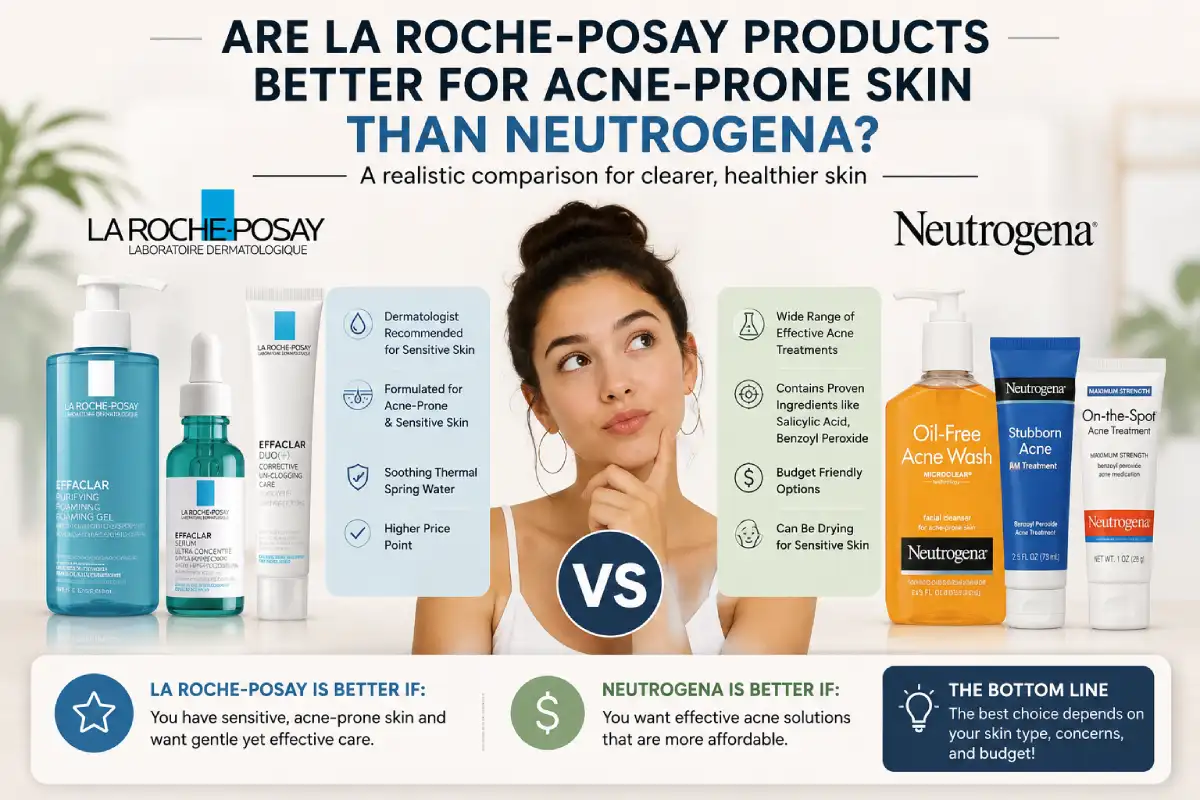
Both offer products for breakout-prone skin, but their approaches are very different: La Roche-Posay’s Effaclar brand focuses heavily on acne while also including some products with skin comfort in mind; Neutrogena offers a far greater variety of affordably priced products that target acne and feature salicylic acid, benzoyl peroxide, or adapalene.
Higher-priced brand by brand isn’t the choice for a student; it’s rather the brand with an active ingredient appropriate for your skin type and in a strength your skin can handle.
Table of Contents
What Does “Acne-Prone Skin” Actually Mean?
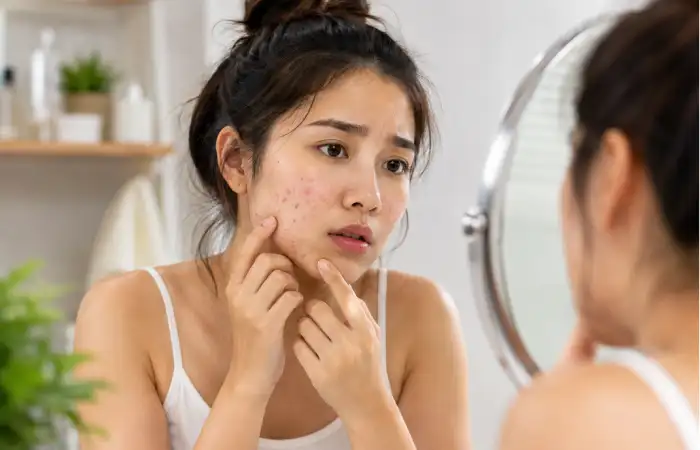
Both offer products for breakout-prone skin, but their approaches are very different: La Roche-Posay’s Effaclar brand focuses heavily on acne while also including some products with skin comfort in mind; Neutrogena offers a far greater variety of affordably priced products that target acne and feature salicylic acid, benzoyl peroxide, or adapalene.
Higher-priced, brand-by-brand isn’t the choice for a student; it’s the brand with an active ingredient appropriate for your skin type and at a strength your skin can handle.
You can have:
- Oily and acne-prone skin
- Dry and acne-prone skin
- Combination and acne-prone skin
- Sensitive and acne-prone skin
- Normal-feeling skin that still develops frequent breakouts
This also explains why you can’t just buy the most “powerful” acne product. That may kill the acne, but if it leaves your skin feeling pulled tight and overly sensitive, you’re less likely to be able to follow that regimen religiously long-term.
La Roche-Posay vs Neutrogena: The Quick Comparison
| Feature | La Roche-Posay | Neutrogena |
| Best known acne range | Effaclar | Oil-Free Acne, Rapid Clear, Stubborn Acne and related ranges |
| Common acne ingredients | Salicylic acid, benzoyl peroxide and other actives depending on product | Salicylic acid, benzoyl peroxide, adapalene and other actives depending on product |
| Good for oily skin | Yes | Yes |
| Good for sensitive skin | Some products are specifically positioned for sensitive skin, but formulas vary. | Some products are gentle, while certain acne products can be drying or irritating. |
| Budget friendliness | Often more expensive | Often more budget-friendly |
| Product variety | Strong acne-focused and sensitive-skin positioning | Very broad acne and everyday skincare selection |
| Best reason to choose | You want a targeted acne routine with attention to tolerability | You want effective acne ingredients with more budget-conscious choices |
The key is what the actual product is as opposed to just a brand name.
Why La Roche-Posay Is Popular for Acne-Prone Skin
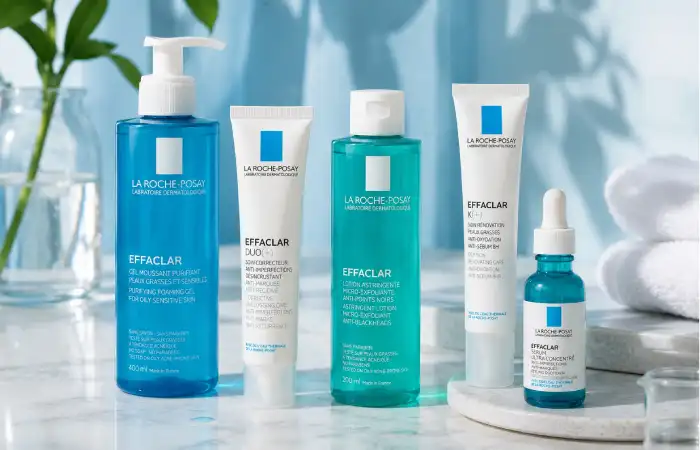
We are aware, at this time already, that the new range of Effaclar from La Roche-Posay is geared towards oily and problem skin, with salicylic, benzoic and glycolic acid and comforting/soothing elements being chosen for the products of this range.
What is Effaclar?
Effaclar refers to La Roche-Posay’s array of skin products geared for oily and blemish-prone skin. There aren’t just one or two such product; there’s an abundance of La Roche-Posay cleansers, acne treatments, moisturizers, as well as other formulas for the skin. This is significant.
Different formulations exist, depending on your kind of acne.
You want a varied prescription whether or not your skin needs an acne remedy for the occasional blackhead rather than for monthly cystic acne breakouts.
Why Neutrogena Is Still a Strong Competitor
Neutrogena’s biggest draw when it comes to acne products targeting college students? Selection. Neutrogena offers items using salicylic acid and benzoyl peroxide (and in some markets, adapalene).
Some Neutrogena US products include the Stubborn Acne AM Treatment, using 2.5 percent benzoyl peroxide, and the Neutrogena Rapid Clear Stubborn Acne Spot Gel, containing 10 percent benzoyl peroxide.
This may mean that the ingredients a consumer selects will align with something that may not feel or make sense. None of the other products may fit its US criteria – Neutrogena India carries a very specifically formulated Oil-Free Acne Wash with salicylic acid for acneic skin. And at the bottom of the ingredients page for the Oil-Free Acne Wash, it reads that the Product is Not For Use By People with Sensitive Skin. Essential!
That’s not an assumption just because they brand themselves as skin-safe skincare; a certain product is still OK.
The reader must check the ingredient list and the direction of usage based on location.
Salicylic Acid vs Benzoyl Peroxide: Which One Do You Need?
This may actually be a more useful question than asking whether La Roche-Posay or Neutrogena is better.
Salicylic acid
Salicylic acid is a beta-hydroxy acid, commonly called BHA. It helps exfoliate the skin and clear material that contributes to clogged pores.
It can be particularly useful when your main problems are:
- Blackheads
- Whiteheads
- Clogged pores
- Excess oil
- Rough skin texture
According to the American Academy of Dermatology, salicylic acid works to unclog pores and exfoliate the skin, so it may help whiteheads and pimples.
Benzoyl peroxide
Use Benzoyl peroxide, the key anti-acne ingredient – Benzoyl Peroxide is an agent with antimicrobial action that minimizes acne bacteria and swelling.
It tends to make more sense when you’re dealing with:
- Red pimples
- Inflamed breakouts
- Pustules
- Frequent inflammatory acne
Benzoyl peroxide is a preferred choice of the AAD for over-the-counter acne treatments. What to watch out for: it can be drying and irritating and, between the peeling of skin, irritation, and some likelihood of bleaching fabrics (depending on concentration), more is not better for a student in a rush!
Is La Roche-Posay Better for Sensitive Acne-Prone Skin?
For this reason, one of the first brands that might come to mind is La Roche-Posay. The Effaclar range of products is used for the treatment of oily, acne-prone, and also sensitive skin, the brand generally claiming a soothing quality overall.
That doesn’t make every La Roche-Posay acne product gentle enough for the masses, however. Any powerful active ingredient will feel harsh depending on the product, no matter the brand.
Think of it this way:
A gentle brand does not make every active ingredient gentle.
If your skin is sensitive, introduce one active at a time. Don’t suddenly add an exfoliating cleanser, benzoyl peroxide treatment, retinoid, toner, scrub, and acne serum all in the same week.
Your skin may respond with irritation rather than clearer skin.
Is Neutrogena Better for a College Student’s Budget?
This is where Neutrogena may have the practical advantage.
College skincare doesn’t have to become a complicated ten-step ritual. A basic routine can be surprisingly simple:
Morning:
Gentle cleanser → moisturizer → sunscreen
Evening:
Cleanser → acne treatment → moisturizer
You don’t need to buy an entire collection from one brand.
In fact, mixing brands is completely reasonable.
You might prefer a La Roche-Posay cleanser, a Neutrogena moisturizer, and another brand’s sunscreen. Skincare isn’t a team sport.
For a student trying to control expenses, choosing one effective acne treatment rather than five trendy products can be a much better strategy.
What Should a College Student Look for in an Acne Product?
Instead of asking, “Which brand is better?”, ask these questions:
1. What kind of acne do I have?
Blackheads and whiteheads often respond differently from red, inflamed pimples.
2. Is my skin oily or dehydrated?
Your oily skin can be dehydrated. If my skin feels stripped down after washing, I used to have really stripping cleaners that did that.
3. Am I using too many active ingredients?
Here’s that simple mistake I warned you about. You’ll increase the odds of irritation with over-exfoliation if you apply salicylic acid, benzoyl peroxide, adapalene, exfoliants, or scrubs all at the same time.
4. Can I actually afford to repurchase it?
An inexpensive routine that you can consistently maintain is often more useful than an expensive routine that you abandon after one month.
A Simple Acne Routine for College Life
You don’t need a bathroom shelf overflowing with products.
Morning
Start your skin routine with a gentle cleanser. If you use an acne medication in the morning, use the product as directed, says Shani Harmon, PA-C at Schweiger Dermatology in New York. Then layer it with a light moisturizer and a broad-spectrum sunscreen.
Sunscreen helps prevent new marks because acne treatments and the discoloration that occurs after acne make it harder to tackle what you can’t stop by adding it with sunscreen. The AAD advises acne sufferers to use non-comedogenic, broad-spectrum sunscreen with an SPF 30 or higher.
Evening
Clean your face gently.
Use one main acne treatment according to the product directions.
Finish with moisturizer.
That’s it.
A simple routine is easier to follow when you’re rushing to class at 8 a.m., studying late, or traveling home for the weekend.
Don’t Skip Moisturizer Just Because You Have Acne
This sounds strange at first.
If your skin is oily and breaking out, putting moisturizer on your face may seem like the last thing you should do.
But acne treatments such as benzoyl peroxide, salicylic acid, and retinoids can dry and irritate the skin. The AAD explains that moisturizer can help acne patients tolerate these treatments and maintain the skin’s moisture balance.
The goal isn’t to make your face greasy.
Look for a moisturizer that feels comfortable and is labeled non-comedogenic, meaning it is formulated to be less likely to clog pores.
La Roche-Posay vs Neutrogena: Which Should You Choose?
Here is the practical answer.
Choose La Roche-Posay if:
- You want an acne-focused range such as Effaclar.
- Your priority is combining acne treatment with attention to skin tolerability.
- You’re comfortable spending more on selected skincare products.
- You want several treatment options within one acne-focused range.
Choose Neutrogena if:
- You want more budget-conscious choices.
- You want a large selection of acne products.
- You specifically want products containing salicylic acid or benzoyl peroxide.
- You’re looking for straightforward everyday acne products.
But there’s another answer that is often even better:
Choose whichever specific product gives you the active ingredient you need without irritating your skin.
That’s the real comparison.
What Does the Dermatology Evidence Say?
The American Academy of Dermatology’s acne guidelines don’t recommend choosing skincare based on brand prestige.
Instead, they emphasize evidence-based acne ingredients and treatment approaches. The guidelines strongly recommend topical benzoyl peroxide and topical retinoids, while salicylic acid and azelaic acid also have supporting recommendations.
The AAD also points out that there isn’t one acne treatment that works perfectly for everybody. Treatment needs to be matched to the person’s acne and skin.
That is probably the most useful lesson for a college student.
You don’t need the “best” brand.
You need a routine you can tolerate, afford, and consistently use.
One Important Mistake to Avoid
Don’t judge an acne product after three days.
Acne treatment takes patience. The AAD recommends giving an acne product around 6–8 weeks when appropriate before deciding that it isn’t working, while following the product’s directions and avoiding unnecessary product switching.
That doesn’t mean you should tolerate severe irritation.
If your skin becomes significantly painful, swollen, severely irritated, or persistently worse, stop and seek professional advice.
And if you have large, painful, deep acne lesions or acne that is leaving scars, over-the-counter skincare may not be enough. A dermatologist can determine whether you need prescription treatment.
Final Verdict: La Roche-Posay or Neutrogena?
But when it comes to college skin acne, between La Roche-Posay and Neutrogena, there is no one “better.” La Roche-Posay will be for anyone who digs the brand’s well-focused, skin-comforting, elegantly formulated pimple products via its Effaclar range, whereas Neutrogena is a solid bet for anyone looking for readily accessible, skin-cooling pimple products at price points that run the gamut. If you’ve got blocked, blackhead-prone skin, grab yourself some salicylic acid.