
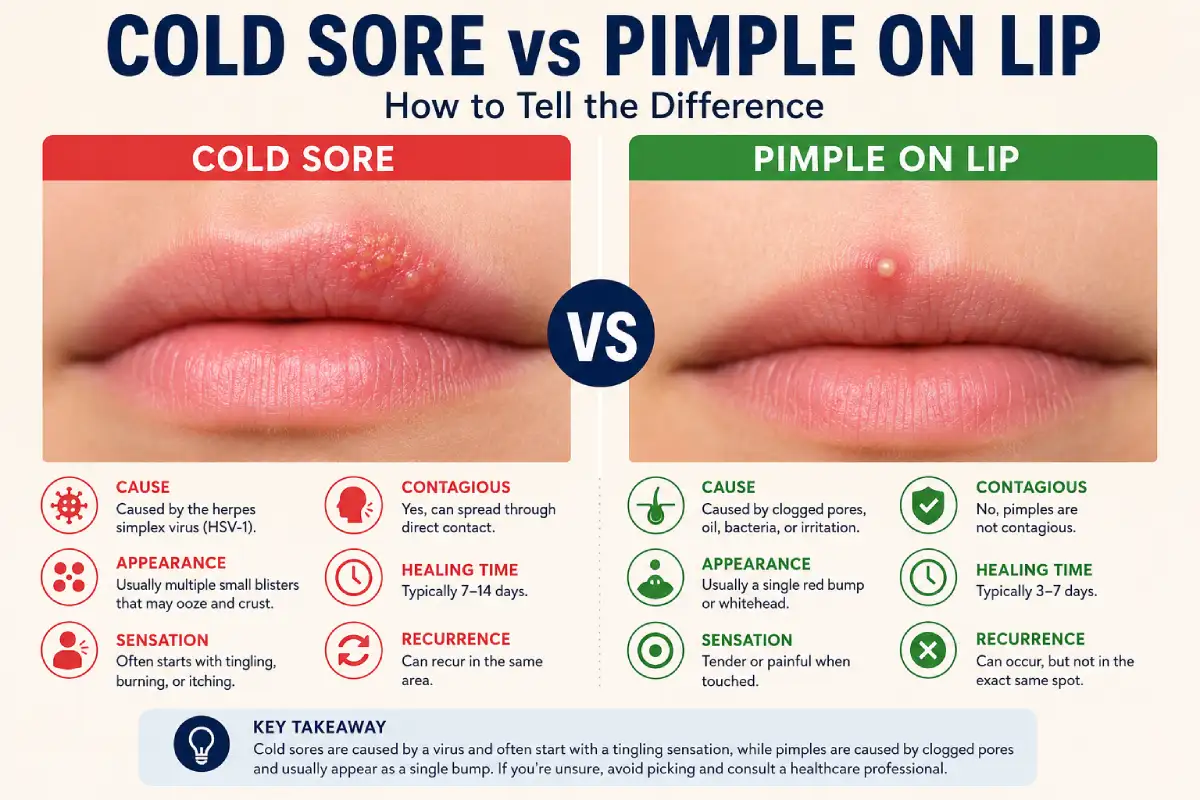
What exactly is THAT tiny thing growing on or by your mouth? The trouble is, it looks nearly impossible to distinguish, and you may easily confuse lip pimples vs lip cold sores until later stages. Initially, the pimples and cold sores on your lips are identical-the bump is red, and you’ll find it’s inflamed and will sting if touched.
“What in the hell do I have?” you think!
To put it simply: to differentiate, there are two key elements you need to look at – the cause of the problem. Pimple formation requires too many skin cells to grow and oil that plugs the follicle, trapping the bacteria behind it. A cold sore is CAUSED by the herpes simplex virus.
virus ( HSV).
Table of Contents
What Is a Cold Sore?
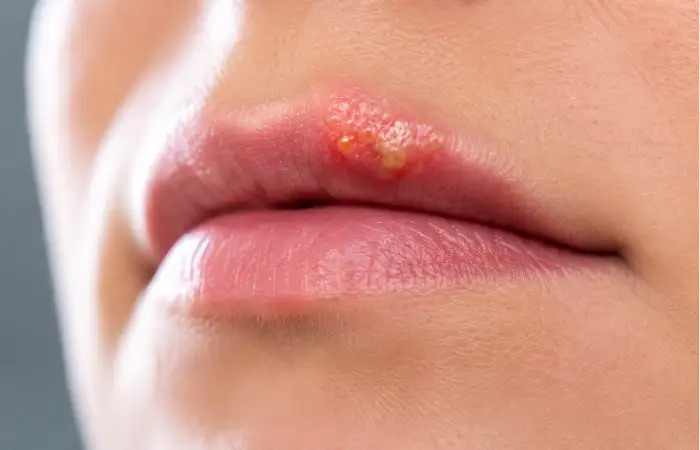
A cold sore, or fever blister as it is often called, is an infectious viral lesion usually caused by the herpes simplex type 1 virus. These common sores are most typically located on or around the lip.
Often, a feeling can be noticed before a visible sore forms. You might sense that an area of your mouth tingles, feels itchy, burned, or abnormal for a day before seeing the characteristic lesion. After this time, a blister may form and soon fill with tiny, fluid-filled sacs.
These can break open later, leaving an open, weeping wound that can crust over. Fortunately, these sores will heal on their own in a matter of days, or sometimes up to a couple of weeks.
The infection lasts a lifetime and is contagious; therefore, cold sores can recur and become apparent. Various factors that can contribute to bringing back an episode in susceptible individuals, such as an illness, exposure to sunlight, stress, too much work, or fluctuations in hormone levels, etc.
What Is a Pimple on the Lip?
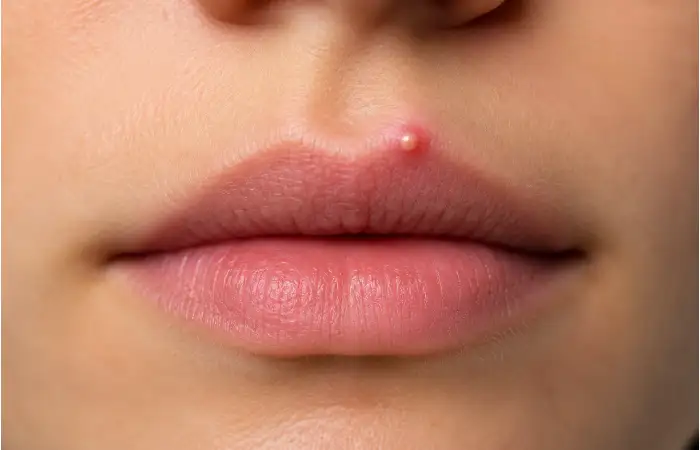
In simpler words, a pimple is a pore in the skin that has become inflamed or blocked. They’re most common in oily skin areas, such as the area around the mouth. A pimple may show up as a red bump, a whitehead, a blackhead, or a painful, deep lump.
Unlike the herpes viruses which cause cold sores, there’s typically no tingling or burning before a pimple develops.
However, many ordinary events can lead to a pimple, including oil, dead skin cells, friction, makeup, and even shaving. A pimple can be uncomfortable, but it should remain an isolated bump on your skin.
Cold Sore vs Pimple on Lip: Main Differences
Although appearance can vary, several clues can make the distinction easier.
| Feature | Cold Sore | Pimple |
| Cause | Usually HSV-1 infection | Clogged or inflamed pore |
| Early sensation | Tingling, burning, itching, or pain may occur first | Usually tenderness develops with the bump |
| Appearance | Often several small fluid-filled blisters | Usually one raised bump or pustule |
| Location | Often on the lip border or surrounding skin | Usually on skin where pores are present |
| Fluid | Clear or slightly cloudy fluid may occur | Pus or oily material may occur |
| Crusting | Common as the sore heals | Can occur if a pimple breaks |
| Contagious? | Yes | No |
| Recurrence | Can return in the same or nearby area | Usually related to recurring acne or clogged pores |
| Typical healing | Often several days to about two weeks | Often resolves within several days, depending on severity |
How Does a Cold Sore Usually Start?
The most revealing information you’ll have is what occurs before the bumps show up. A blister always comes with a premonition. There’s a stage of early signs before a sore shows up-the prodrome -and it usually comes with a tingling, itchy, tight, tender, and burning spot around the lip area. Next, there are tiny blisters, sometimes packed on top of each other, then merging into a raw area.
Over time, blisters may pop and a crust forms.
Because of the various forms a lesion may take as it heals, the full-blown sore will no longer resemble the classic blisters. Because of the many faces a sore can present at this late stage, identifying it as a blister based on the lesion alone can be tricky.
How Does a Pimple Usually Start?
Generally, inflammation occurs in your pore. It could begin as a very small pink or red bump, or as a flesh-colored growth. The area could then swell up further as the inflammation increases and can begin to get sore.
Some pimples may form a well-defined white or yellowish center with pus.
You wouldn’t typically expect a breakout of clear, water-filled blisters- it would behave like a typical pimple. Look at how it is on the face: if you know it has the same appearance as any other pimples on the face, and it behaves like the others, it would be more plausible that it is another pimple.
Where Does a Cold Sore Appear?
They may be on the outer border of the lips, but a lesion can occur nearby on the face. Frequently, the lesion will appear in a similar part of the lips. A person will likely notice a lesion because the same area around their lips may tingle and become sensitive.
When the actual lesions form, they may be seen inside the mouth.
It is important to know that lesions in the mouth are not always cold sores; other causes, such as canker sores, can also cause ulcers in the mouth.
Where Does a Pimple Appear?
Pimples are more likely to happen in areas with hair and pores. Therefore, acne may happen around the upper lip, just above or below. A Pimple would appear on the chin or the area around the mouth.
From time to time, a pimple would pop out so close to the edge of the lip that you could be tempted to say it is a cold sore.
A simple trick is to check whether your lesion is on the skin surrounding the mouth rather than on the fleshy, moist lining of the lip.
Cold Sore or Pimple: What Does It Feel Like?
There’s likely no distinction between the two, and pain is not likely to be a guide to which one they have. Cold sores tend to first feel like irritation, pins and needles, tingling, itching, heat, or sensitivity. Once some blisters appear, they may burn, become irritating, or be painful to eat or drink with; smiling and movement of the lip and, of course, speaking, can make them feel even more.
Pimples sting and can also become rather painful once established and inflamed, a tender bump.
So it is more helpful to know when it is painful than that they are painful-pins are very unlikely to be felt before a cold sore shows, where a pimple around a bump implies the lump is just one type of pimple.
Can You Pop a Cold Sore or Pimple?
It’s not advisable to pop either of these. Doing so in the case of a pimple may cause damaged skin, increased swelling, and possibly scarring. Squeezing a pimple can even introduce more bacteria to it.
A cold sore should definitely not be popped.
Popping the blisters can spread the virus and fluids to other body parts and even other people. It is particularly important not to touch the sore and then touch the eye since herpes infecting the eye can be serious. After touching anything you suspect might be a cold sore, make sure to wash your hands.
Is a Cold Sore Contagious?
Yes. Cold sores are contagious.
HSV is transmitted through contact with an active lesion or with contaminated saliva or skin. Kissing or oral intercourse are methods of transmission.
Transmission risk is highest when a cold sore or blister is active. Kissing should be avoided, as should the sharing of items that could enter the mouth when a person has a cold sore present. HSV is sometimes transmitted during a period when no sore is present; thus, the absence of a blister is no protection from transmitting the infection
Are Pimples Contagious?
No, standard acne does not affect others. If a person touches their own or another’s skin, they would not contract the disease of pimples. A serious risk is continuing to squeeze one’s pimples, as they will become more inflamed and more likely to develop a bacterial infection.
Why Do Cold Sores Come Back?
HSV virus remains in the body in a latent/inactive phase once infection has taken place. It may activate at a later time. The frequency of recurrent disease outbreaks depends on the person and varies from person to person. Some of them have a single outbreak, while others have multiple outbreaks.
Possible triggers include:
- Illness or fever
- Physical or emotional stress
- Lack of sleep
- Sun exposure
- Hormonal changes
- Skin or lip irritation
- A weakened immune system
Not everyone has an obvious trigger, and having a recurrence does not necessarily mean that anything is seriously wrong.
Why Do Pimples Develop Around the Mouth?
There are several reasons the skin around the mouth may develop pimples. Over the centuries, many homes have found pimples around the mouth to indicate an infection within. Oil and skin cells can cause blockages, which can lead to inflammation.
Hormone surges increase oil production, and if a person finds that this occurs regularly, it may be due to their hormones being in particular states.
Other factors that may contribute include: excessive use of cosmetics, lipstick, and other irritants around the lip area, a change in grooming habits, or the development of habits like rubbing your face and shaving with sensitive skin.
What Can You Do for a Suspected Cold Sore?
A cold sore will sometimes clear up without taking any medication. Clean and do not disturb the sore as much as possible. Antiviral medication may be advisable in some cases.
A person may get the most from antiviral medication if treatment is taken early in relation to developing symptoms.
For someone who frequently develops cold sores, it can be helpful to discuss prevention and treatment options with their doctor. During a cold sore outbreak, do not pick at the sore, kiss anyone, or share anything that touches your mouth.
What Can You Do for a Pimple on the Lip?
So if you sense a break-out is coming on, careful handling and prevention are probably doing yourself a bigger favour than harsh scrubbing. Wash around the blemish, but avoid any poking or pressing. Aggressive scrubbing or exfoliating and repeated application of chemical treatments on the lip will only add to discomfort.
For those with frequent bouts of zits on and around their lips, a dermatologist can help determine whether this is acne, irritation, or another problem entirely.
Just do not slather a lesion with acne preparations; you might be sure to irritate it if you might mistake it for a cold sore.
When Should You See a Doctor?
Consider getting medical advice if you are unsure whether a lesion is a cold sore, pimple, or another skin condition.
Professional evaluation is especially appropriate when:
- The sore is severe or unusually painful.
- Lesions keep returning.
- The area is spreading rapidly.
- The sore does not appear to be healing.
- You develop sores near the eye.
- You have significant swelling or difficulty eating or drinking.
- You have a weakened immune system.
- You are experiencing your first suspected herpes outbreak.
- The diagnosis remains unclear after several days.
A healthcare professional can examine the lesion and, when necessary, perform testing to determine its cause.
Cold Sore vs Pimple on Lip: The Bottom Line
The main thing that distinguishes a cold sore from a pimple on the lip is how they start and what they generally look like.
A cold sore is caused by the HSV virus, typically starts with a tingling, burning, or itching feeling, and the blisters that appear are small and full of fluid; they may appear alone or together. They are contagious and may reappear later.
A pimple starts with a blocked or irritated pore, usually only a single bump, and is not contagious