
For decades, anti-aging innovation has revolved around a predictable cycle of ingredients. First came retinoids. Then antioxidants. Then peptides, stem cells, and growth factors. Each wave promised to outsmart time by stimulating collagen, accelerating turnover, or defending against environmental damage.
But a new frontier is emerging that shifts the conversation from structural repair to biological communication. At the center of this evolution is a surprising molecule more commonly associated with love than luminosity: oxytocin.
Often referred to as the “love hormone,” oxytocin is best known for its role in bonding, intimacy, and emotional regulation. Now, growing research suggests it may also play a meaningful role in skin aging, inflammation, and resilience. This shift reflects a broader movement within beauty: the rise of emotional biology and neurocosmetics.
Table of Contents
The Skin-Brain Connection Gets Serious
The concept of the brain-skin axis is not new. Dermatologists have long observed that stress exacerbates conditions like acne, eczema, psoriasis, and premature aging. Cortisol, the body’s primary stress hormone, is known to impair barrier function and increase inflammation.
What is newer is the recognition that the opposite may also be true. If stress hormones accelerate aging, could connection hormones help slow it?
Research shows that oxytocin is not only produced in the brain, but also in the skin. Keratinocytes release oxytocin in response to gentle touch. Once present in the skin, oxytocin binds to receptors on fibroblasts—the cells responsible for producing collagen and elastin. This interaction appears to influence inflammatory signaling pathways associated with aging, including the senescence-associated secretory phenotype, or SASP.
The SASP pathway is increasingly recognized as a major driver of visible aging. When activated, it promotes chronic low-grade inflammation and tissue breakdown. Modulating this pathway has become an area of interest in longevity science. Its relevance in skincare is only beginning to be explored.
From Observation to Innovation
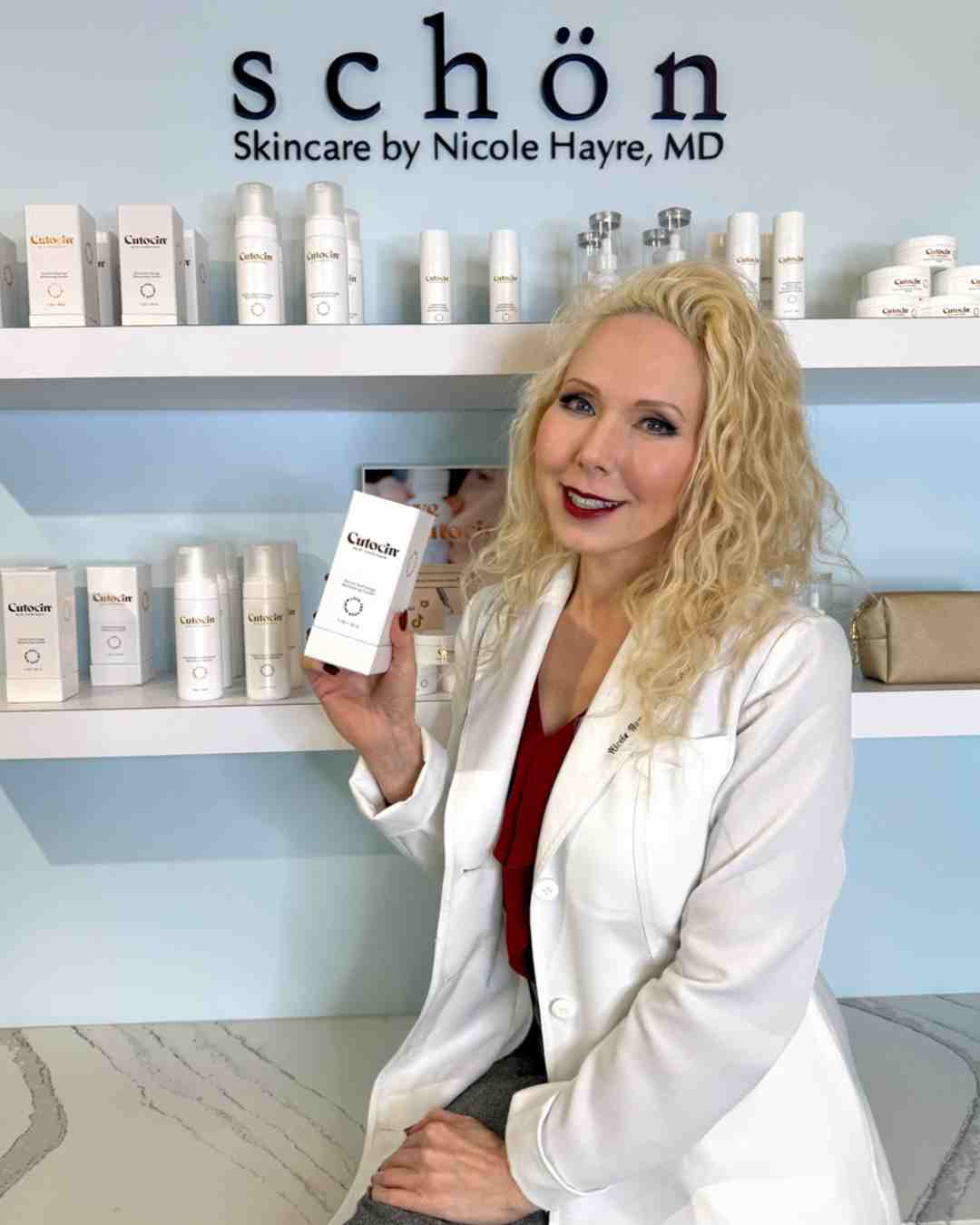
Board-certified dermatologist and MIT alum Dr. Nicole Hayre was among the first to clinically explore oxytocin’s connection to skin health. In her practice, she observed consistent patterns in patients undergoing significant emotional changes. Individuals experiencing new love or strong connection often appeared visibly more radiant. Others navigating heartbreak or chronic stress frequently showed dullness, inflammation, and accelerated aging.
Those clinical observations led to a formal study examining oxytocin levels and visible skin quality. The findings, later published in the Journal of Drugs in Dermatology, demonstrated a correlation between higher oxytocin levels and healthier, more youthful-looking skin. The study marked the first clinical evidence linking oxytocin to visible skin outcomes.
The implications extended beyond theory. If oxytocin influences skin function, then supporting oxytocin-related pathways could represent a new category of active ingredient strategy.
Enter Neurocosmetics 2.0
The beauty industry has already embraced neurocosmetics, a category that acknowledges the relationship between the nervous system and skin. Traditionally, this space has focused on ingredients that create sensory pleasure—cooling effects, calming textures, mood-enhancing fragrances.
The next evolution of neurocosmetics moves beyond sensation and into cellular signaling.
Rather than simply making skin feel calm, this approach explores how to influence the biological pathways involved in inflammation, cellular aging, and tissue repair. Oxytocin sits at the center of this conversation because it operates at both the emotional and cellular levels.
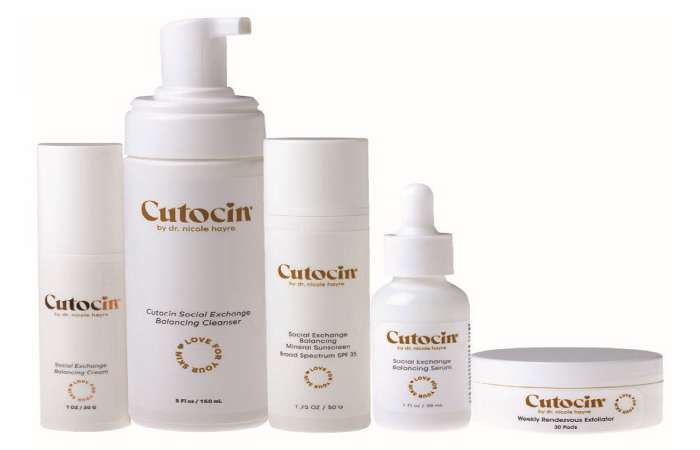
Dr. Hayre’s work led to the development of Cutocin®, a skincare line built around a patented botanical shown to have oxytocin-like effects. Instead of applying oxytocin directly, which would raise regulatory and systemic concerns, the formulation uses a plant-derived compound historically recognized for its oxytocin-related properties. The goal is to support the skin’s natural signaling systems in a topical, cosmetic framework.
This distinction matters. In today’s regulatory environment, brands must carefully avoid disease claims while still communicating meaningful science. Supporting healthy skin function is not the same as treating medical conditions, and this nuance defines the future of biotech beauty.
Why Emotional Aging May Be the Missing Piece
Inflammation is widely acknowledged as a central driver of aging. What is less discussed is how strongly emotional states influence inflammatory load in the body.
Chronic loneliness, high stress, and emotional isolation have been associated with increased inflammatory markers systemically. Positive social connection, on the other hand, is linked to improved immune regulation and stress resilience. The Oxytocin Social Exchange System, sometimes abbreviated as O-SEX, is an emerging framework that examines how oxytocin mediates communication not just between cells, but between individuals.
In this model, connection itself becomes biologically protective.
If skin aging is partially driven by inflammatory signaling, and oxytocin helps regulate that signaling, then emotional well-being becomes directly relevant to dermatology. This perspective expands skincare beyond topical intervention and into lifestyle integration.
The Consumer Is Ready
Today’s consumer is more informed than ever. Longevity, biohacking, hormone optimization, and nervous system regulation are mainstream conversations. Beauty is no longer siloed from wellness. Instead, it sits at the intersection of internal health and external expression.
Consumers are increasingly skeptical of miracle claims. They want mechanisms, published research, and credible founders. They also want products that align with a broader lifestyle focused on balance and resilience.
An oxytocin-informed approach to skincare meets that demand. It acknowledges that aging is multifactorial. It integrates emotional wellness into the beauty conversation. And it offers a science-backed narrative that feels both innovative and intuitively true.
What Comes Next
The exploration of oxytocin in skincare is still in its early stages. Future research will likely expand into how oxytocin interacts with other longevity pathways, including mitochondrial function, immune signaling, and cellular senescence.
The SASP pathway, already a target of interest in longevity medicine, may become increasingly relevant in dermatologic innovation. While cosmetic products cannot claim to alter systemic aging processes, supporting healthier cellular communication within the skin represents a compelling direction.
The broader implication is clear: the next wave of anti-aging will not rely solely on resurfacing or stimulating. It will focus on regulation. On restoring balance rather than forcing turnover. On working with the body’s communication systems rather than overriding them.
In that future, skincare will be viewed less as surface maintenance and more as a reflection of emotional and biological harmony. Oxytocin may not replace retinoids or antioxidants, but it introduces a powerful new dimension to the conversation.
Beauty has always been about connection to self, to ritual, to confidence. Now science is beginning to show that connection may also be written into the biology of the skin itself.
And that realization could redefine what anti-aging truly means.