
Table of Contents
Summary
The Dot & Key Strawberry Dew Tinted Sunscreen is a hybrid SPF 50+ PA++++ product with niacinamide, hyaluronic acid, and strawberry extract. It offers light coverage, visible light protection, and a non-oily finish — making it ideal for Indian skin types seeking a foundation-free, glowing everyday look. Available in 5 shades. Best for normal, oily, combination, and acne-prone skin. Those with very dry skin may want to layer it over a rich moisturiser.
If you’ve been looking at the Dot & Key tinted sunscreen and wondering whether it genuinely delivers or just looks good on Instagram — you’re asking the right question.
This guide goes beyond the surface. We’re breaking down the actual ingredients, the science behind why tinted sunscreen works differently from regular SPF, who it suits, who it doesn’t, and whether the shades actually work for Indian complexions.
What Is the Dot & Key Tinted Sunscreen, Exactly?
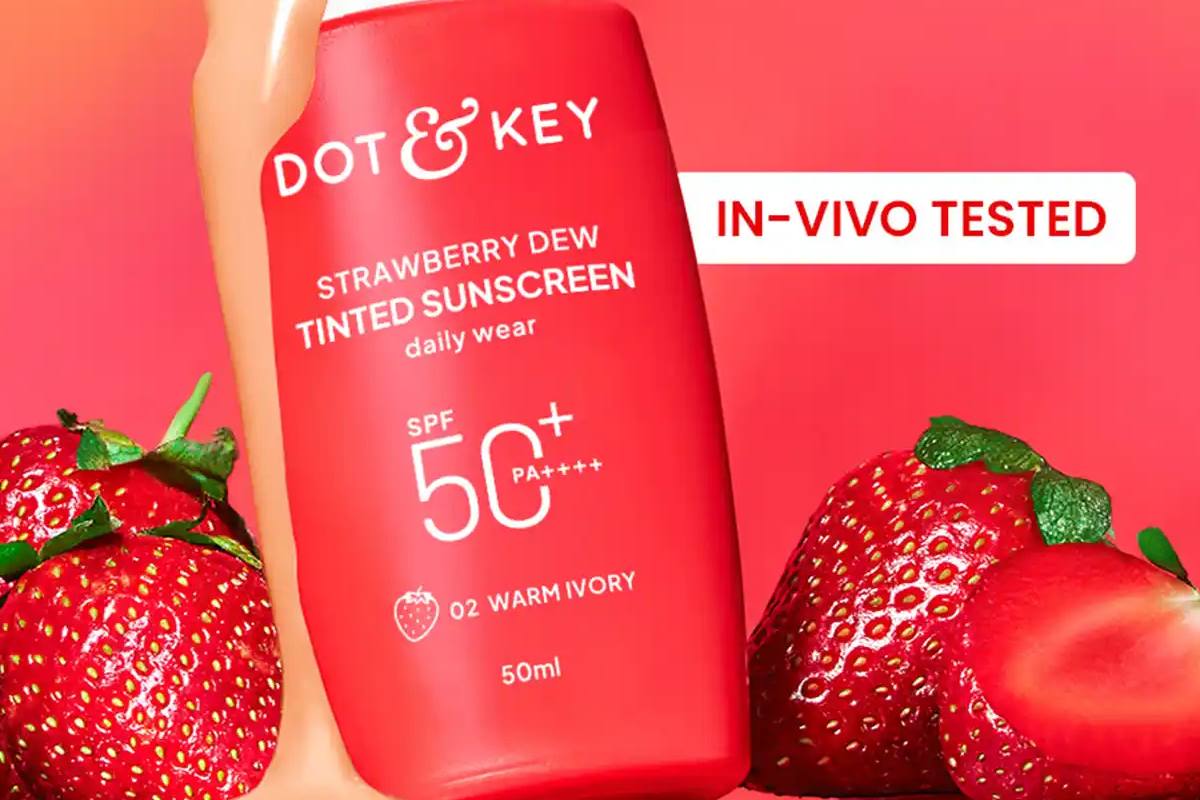
The Dot & Key Strawberry Dew Tinted Sunscreen is a 2-in-1 hybrid product that combines broad-spectrum SPF 50+ PA++++ sun protection with light-coverage tint designed to even out your skin tone and give you a natural, dewy finish.
It is clinically in-vivo tested to verify SPF 50+ PA++++ protection on real human skin under controlled laboratory conditions, with an in-vivo SPF reading of 53.90 and an in-vitro SPF of 69.12 — tested per international standards IS 17494:2025 and COLIPA guidelines. Dot & Key
Translation: this isn’t just a marketing claim. The SPF is lab-verified on real skin, not just in a dish.
Why Tinted Sunscreen Is a Different Beast from Regular SPF
Most people don’t realise that a tinted sunscreen does something a clear sunscreen physically cannot: it protects against visible light (VL).
Here’s the problem. Regular sunscreens block UVA and UVB rays, but visible light (the part of sunlight we can actually see, between 400–700nm) is a major and underappreciated trigger for skin darkening — especially in Indian skin tones.
Visible light contributes to 45% of solar radiation and causes skin darkening and worsening of hyperpigmentation, particularly in individuals with Fitzpatrick skin phototypes III and higher — which covers the majority of Indian skin tones. Conventional sunscreens provide very limited protection against this spectrum.
This is where tinted formulas step in. Tinted sunscreens use iron oxides and pigmentary titanium dioxide to provide protection against visible light — and broad-spectrum sunscreens, even at SPF 50+, simply do not offer this same protection.
So for anyone dealing with melasma, post-acne marks, or uneven skin tone — a tinted sunscreen isn’t vanity. It’s actually the more protective option, backed by peer-reviewed dermatology research published in the Journal of the American Academy of Dermatology.
Dot & Key Tinted Sunscreen: Key Ingredients Breakdown
The full ingredient list includes Ethylhexyl Methoxycinnamate, Butyl Methoxydibenzoylmethane (Avobenzone), Benzophenone-3, Titanium Dioxide, Sodium Hyaluronate, Niacinamide, Strawberry Fruit Extract, D-Panthenol, Tocopheryl Acetate (Vitamin E), and Tapioca Starch. InciDecoder
Here’s what each hero ingredient actually does:
Niacinamide — Reduces melanin transfer to the skin surface, which means it actively fades dark spots and post-acne marks over time. Also controls oil, reduces pore appearance, and strengthens the skin barrier.
Sodium Hyaluronate (Hyaluronic Acid) — A humectant that pulls moisture into the skin, keeping it hydrated without greasiness. Particularly important in Delhi/Mumbai summers where AC strips skin of moisture.
Strawberry Fruit Extract — Rich in Vitamin C and antioxidants. Helps neutralise free radicals from pollution, which is a real concern in Indian cities.
Avobenzone + Octinoxate + Benzophenone-3 — The triple chemical UV filter combination. Together they cover both UVA and UVB rays. Note: Avobenzone provides UVA range protection; it’s one of the most globally approved UVA filters.
Titanium Dioxide — Acts as a mineral filter and gives the product its tint. Also enhances visible light protection when combined with iron oxides.
D-Panthenol (Provitamin B5) — Soothes inflammation, supports skin barrier repair, and adds a gentle conditioning effect. Great for reactive or post-procedure skin.
Tapioca Starch — A texture-perfecting ingredient that gives the product its smooth, non-sticky, blurred finish. Absorbs excess oil on application.
Available Shades: Do They Actually Work for Indian Skin?
This is where many Indian users have historically been let down by tinted products — shades that look orange, ashy, or are designed for Western complexions.
The Dot & Key Strawberry Dew Tinted Sunscreen comes in 5 flexible shades designed specifically to work across different Indian skin tones. The current shades include Porcelain, Warm Ivory, Beige, Sand, and a deeper option. The shades use a blend of yellow, red, and black iron oxides — which is the correct approach for matching Indian undertones (warm, olive, and golden-brown complexions).
Honest take: The shades skew slightly towards neutral-to-warm undertones. If you have very deep skin (Fitzpatrick V–VI), the coverage may appear lighter than expected. For medium-to-dusky Indian complexions (the majority), the Beige and Sand shades blend quite naturally.
Benefits: What You Actually Get
1. Sun protection that works in real conditions The SPF is clinically tested to be 80 minutes water and sweat resistant Dot & Key — critical in the Indian climate where you’re sweating from the moment you step outside.
2. Fades dark spots over time The formula checks tanning and sun damage while actively fading dark spots over time Dot & Key, thanks to the combination of niacinamide and broad-spectrum UV filters.
3. Light coverage without the makeup weight Unlike regular sunscreen, it acts as a subtle makeup alternative, making it ideal for a no-makeup look. Dot & Key It blurs redness, uneven texture, and minor blemishes — without the cakey feeling of foundation.
4. Visible light protection As covered above, the iron oxide tint provides protection against the visible light spectrum that clear sunscreens miss — a genuine advantage for Indian skin prone to hyperpigmentation.
5. Doubles as a primer Tinted sunscreen works as a primer, creating a smooth base for makeup. It evens skin tone and adds an extra layer of sun protection — just let it set for a minute before applying foundation or concealer.
Drawbacks: What to Know Before You Buy
The tint is not sweat-proof. User reviews confirm that the SPF is water and sweat resistant, but the tint itself is not — wearing it in peak Indian summer outdoors can cause the coverage to shift. Amazon Think of it as a light skin-tint, not a waterproof foundation.
Not a full shade match for very fair or very deep skin. The shade range, while improved, still has gaps at the extreme ends of the Indian skin tone spectrum.
Reapplication is tricky. Like all tinted sunscreens, reapplying over makeup without disturbing it mid-day requires a setting spray or blotting routine.
Not ideal for very dry skin without layering. While it contains hyaluronic acid, very dehydrated or flaky skin may find the finish highlights dryness. Apply a hydrating moisturiser underneath first.
Who Should Use It
- Anyone wanting a no-makeup, sun-protected look for work-from-home errands or daily commutes
- Those with oily, combination, or acne-prone skin — the non-comedogenic, tapioca starch-infused formula controls shine without clogging pores
- People dealing with post-acne marks, melasma, or uneven skin tone — the visible light protection offers an advantage over regular SPF
- Beginners who want to simplify their morning routine into one product
Who Should Think Twice
- Those with very dry or dehydrated skin who need a richer sunscreen base
- Anyone needing medium-to-full coverage — this is a skin tint, not a foundation
- Those with very deep complexions who may not find a perfect shade match yet
- People who prefer fragrance-free formulas entirely (the product uses strawberry extract which has a mild scent)
Common Mistakes People Make with Tinted Sunscreen
Using too little product. Apply about a quarter teaspoon — or three fingers full — to the face and neck for full SPF protection. Dot & Key Most people under-apply and end up with roughly half the stated SPF.
Skipping reapplication. SPF wears off. Reapply every 2 hours outdoors regardless of SPF rating.
Expecting foundation-level coverage. Tinted sunscreen is sheer. If you want coverage over active breakouts, use concealer on top.
Picking the wrong shade. Always swatch on your jawline (not your wrist — your wrist is often a different shade) in natural daylight before committing.
Myths vs. Facts
| Myth | Fact |
|---|---|
| Tinted sunscreen causes breakouts | This formula is non-comedogenic and oil-free — suitable for acne-prone skin |
| It leaves a white cast | The tint eliminates white cast entirely |
| SPF 50 means all-day protection | You must reapply every 2 hours regardless of SPF number |
| Tinted sunscreen replaces moisturiser | It has hydrating ingredients but isn’t a substitute for moisturiser if you have dry skin |
| Only people with skin concerns need tinted SPF | Anyone exposed to visible light benefits — Indian sun exposure is intense year-round |
How to Use It: Step-by-Step
- Cleanse your face and follow with your serum (if any)
- Apply a light moisturiser if you have dry or combination skin — let it absorb
- Take three finger-lengths of the tinted sunscreen
- Apply directly on the face using patting and blending motions — not rubbing
- Blend outward toward the hairline and down toward the neck for an even finish
- Let it set for 60 seconds before applying any additional makeup
- Reapply every 2 hours if you’re outdoors
How It Compares: Tinted vs. Regular Sunscreen for Indian Skin
The question isn’t which is “better” universally — it’s which matches your skin’s needs.
Regular sunscreen offers equally effective UV protection and may be preferable if you want a completely sheer finish. Tinted options excel in multitasking — the choice depends on your skin needs. Dot & Key
However, if you’re specifically dealing with hyperpigmentation, melasma, or post-inflammatory dark spots — the science now firmly supports tinted formulas. A 2025 peer-reviewed study published in the Journal of Cosmetic Dermatology found that the daily use of a high-protection tinted sunscreen containing iron oxides not only prevented melasma recurrence during summer but significantly improved the uniformity of pigmentation — an outcome that untinted broad-spectrum sunscreen couldn’t match.
FAQs
Q: Is Dot & Key tinted sunscreen good for oily skin? Yes. The non-oily, tapioca starch-based formula absorbs excess sebum and maintains a natural matte-to-dewy finish without clogging pores.
Q: Does it leave a white cast? No. The tint neutralises the white cast that mineral-based sunscreens typically leave, making it suitable for Indian and deeper skin tones.
Q: Can I use it without other sunscreen? Yes, provided you apply the correct amount (three finger-lengths) and reapply every two hours outdoors.
Q: Is it suitable for sensitive skin? The formula contains niacinamide and hyaluronic acid, which are gentle and well-tolerated. It is free from parabens, sulfates, drying alcohols, and chemical fragrances per ingredient analysis.
Q: Can I use it as foundation? It can replace light foundation for everyday wear, but provides sheer coverage only. Use concealer over active spots or blemishes if needed.
Q: How many shades are available? Currently 5 shades — Porcelain, Warm Ivory, Beige, Sand, and deeper options — designed for Indian skin tones.
Q: Is it water resistant? The SPF is tested water and sweat resistant for 80 minutes. The tint is not water-resistant and will transfer with heavy perspiration.
Final Conclusion
The Dot & Key tinted sunscreen earns its place in a simplified Indian skincare routine — not because of marketing, but because of what’s inside it. A lab-verified SPF 50+ PA++++ rating, iron oxide-based visible light protection that regular sunscreens can’t offer, niacinamide for dark spot correction, and a non-comedogenic formula that won’t fight your oily or acne-prone skin.
It won’t replace a full skincare routine, and it isn’t a foundation. But as a daily skin-tint-meets-sunscreen hybrid, it does something genuinely useful: it protects Indian skin from the full spectrum of sun damage — UV and visible light — while making you look like you’ve made an effort, even when you haven’t.
Pick your shade carefully, apply generously, and reapply outdoors. That’s the formula for making it work.
