
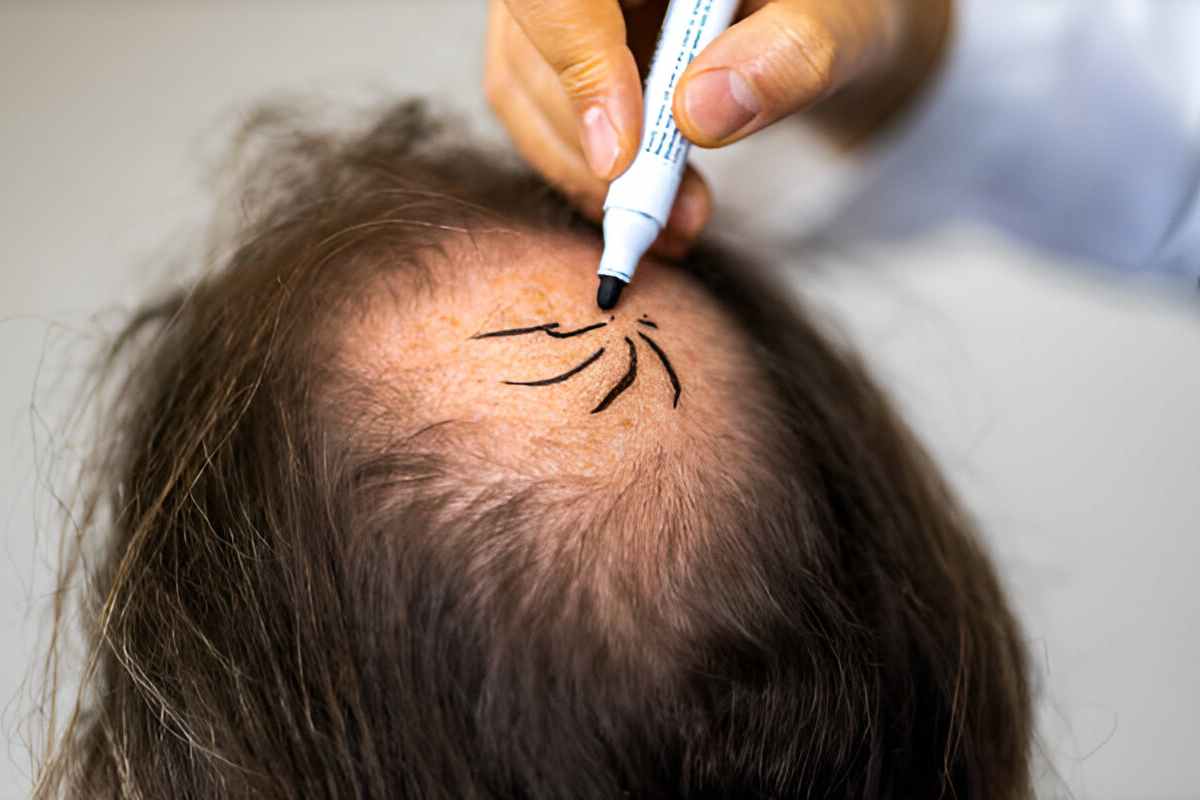
Hair loss can lead to a lack of confidence, depression, low self-esteem, and other undesirable feelings. Fortunately, there are some solutions to manage or treat hair loss. An increasingly popular procedure to minimize the appearance of hair loss is hair micropigmentation. It is a non-invasive method to mimic natural hair on the scalp. Continue reading to learn more about hair micropigmentation.
Table of Contents
Basics of hair micropigmentation
Hair micropigmentation is a type of hair tattoo used to cover bald spots on the scalp that has gained popularity as a non-surgical treatment for hair loss. In scalp micropigmentation, thin needles deposit color on the scalp, providing an impression of thicker hair. Typically, the ink used in hair micropigmentation is cosmetic grade and permanent.
The most common candidate for hair micropigmentation is someone who has bald spots, thinning hair, alopecia, or visible scarring on the scalp. While the most common application of hair micropigmentation is to provide the appearance of thicker hair, it can also be used to hide scars or unwanted birthmarks. As male pattern baldness is most common around the crown and hairline, that is the area most commonly treated for thinning hair. Keep in mind that micropigmentation doesn’t grow new hair and is generally not harmful to existing hair follicles.
What Is Hair Micropigmentation?
Hair micropigmentation, commonly known as scalp micropigmentation, is a non-surgical cosmetic procedure designed to replicate the appearance of tiny hair follicles.
During the treatment, a trained practitioner uses specialised equipment and fine needles to deposit small amounts of pigment into the scalp. These carefully placed dots create the illusion of closely cropped hair or greater density in areas where natural hair has become thin.
The procedure is commonly considered by people experiencing:
- Male or female pattern hair loss.
- Receding hairlines or thinning crowns.
- Visible bald patches.
- Hair thinning caused by certain types of alopecia.
- Scalp scars resulting from injuries or previous hair transplant procedures.
- Uneven hair density.
Scalp micropigmentation can also help camouflage certain scalp scars and make areas with reduced hair density appear more uniform.
The pigment does not stimulate hair growth or restore damaged follicles. It is a cosmetic treatment intended to improve the visual appearance of the scalp. It is generally designed to work alongside existing hair rather than interfere with healthy follicles when performed correctly.
How Does Hair Micropigmentation Work?
The main objective of scalp micropigmentation is to recreate the appearance of natural hair follicles. The practitioner considers the client’s existing hair colour, skin tone, hairline, facial features and desired hairstyle before deciding where to place the pigment.
The procedure generally involves the following steps:
1. Initial consultation
The practitioner examines the scalp, discusses the client’s expectations and determines whether micropigmentation is appropriate. The desired hairline, pigment shade and treatment areas are also discussed.
2. Preparation of the scalp
The scalp is cleaned and prepared before treatment. Depending on the area being treated and the desired result, the practitioner may recommend shaving or trimming the hair.
3. Application of pigment
Specialised equipment with fine needles deposits small pigment impressions into the upper layers of the skin. The size, spacing and placement of these impressions are carefully controlled to create a natural-looking appearance.
4. Multiple treatment sessions
Most clients require more than one appointment to achieve the desired density and appearance. Sessions are generally spaced apart to allow the scalp to recover and the practitioner to assess the previous application.
5. Final assessment
The practitioner evaluates the result and determines whether additional pigment application is necessary to improve consistency or density.
Treatment duration varies depending on the size of the area, the complexity of the work and the number of sessions required.
Hair Tattoo vs. Scalp Micropigmentation: What Is the Difference?
Scalp micropigmentation is sometimes described as a hair tattoo because both procedures involve depositing pigment into the skin. However, SMP is a specialised cosmetic technique rather than a conventional decorative tattoo.
Some important differences include:
| Feature | Conventional tattoo | Scalp micropigmentation |
|---|---|---|
| Main purpose | Decorative artwork | Simulate hair follicles |
| Equipment | Tattoo machines and needles | Specialised SMP equipment |
| Pigment | Tattoo inks | Pigments formulated for cosmetic scalp procedures |
| Application | Varies by tattoo design | Small, carefully placed follicle-like impressions |
| Design | Artistic patterns and images | Natural-looking hairline and density effect |
| Intended appearance | Tattoo artwork | Closely cropped hair or fuller-looking scalp |
SMP practitioners receive specialised training to understand scalp anatomy, pigment placement, hairline design and colour selection.
The depth of pigment application is important. If pigment is deposited too deeply or the impressions are too large, the dots may spread or appear less natural. If the application is too superficial, the pigment may fade more quickly.
The pigment and technique should be selected according to the client’s skin characteristics and desired result. Unlike ordinary tattoo ink, SMP pigments are specifically chosen for the intended scalp appearance.
How to Prepare for Hair Micropigmentation
Preparing properly can help make the procedure more comfortable and support the healing process.
Before your appointment, consider the following recommendations:
- Attend a consultation: Discuss your medical history, scalp condition, allergies and expectations with the practitioner.
- Follow scalp-care instructions: Ask which shampoos, oils and styling products should be avoided before treatment.
- Discuss shaving requirements: Some clients may need to shave the treatment area, while others may only need trimming.
- Avoid alcohol if advised: Your practitioner may recommend avoiding alcohol before the procedure.
- Review medications: Inform the practitioner about prescription medicines, supplements and blood-thinning medications. Never stop prescribed medication without speaking to the prescribing clinician.
- Discuss skin conditions: Active scalp infections, irritation or inflammation may require treatment before SMP can be performed.
It is also important to discuss any history of allergic reactions or sensitivity to cosmetic pigments.
Hair Micropigmentation Recovery and Aftercare
Scalp micropigmentation generally involves less downtime than surgical hair restoration. However, the skin still needs time to heal after the pigment application.
Mild redness, tenderness or sensitivity may occur shortly after treatment. The healing period varies depending on individual skin responses, the treatment area and the practitioner’s technique.
Follow the aftercare instructions provided by your practitioner. These may include:
- Keeping the treated area clean according to professional instructions.
- Avoiding unnecessary touching or scratching.
- Avoiding swimming pools, saunas and excessive sweating during the recommended healing period.
- Avoiding direct sunlight on the treated scalp while it heals.
- Using sunscreen after the skin has healed, as advised.
- Avoiding harsh scalp products until the practitioner confirms they are suitable.
Do not assume that every client needs exactly the same recovery period. Your practitioner should provide a personalised aftercare schedule.
If you experience increasing pain, spreading redness, swelling, pus or fever, seek medical advice because these symptoms may indicate an infection.
A follow-up appointment can help assess how the pigment has settled and whether another session is required.
Benefits of Hair Micropigmentation
Scalp micropigmentation offers several potential advantages for people who want a non-surgical way to improve the appearance of thinning hair.
1. Non-Surgical Cosmetic Treatment
One of the main benefits is that SMP does not require hair transplantation or surgical incisions. It uses specialised needles to deposit pigment into the scalp.
This makes it an option for people who want to avoid hair restoration surgery.
2. Creates the Appearance of Fuller Hair
Carefully positioned pigment impressions can make thinning areas appear denser. For people who prefer a closely shaved hairstyle, SMP can create the appearance of a consistent, freshly shaved scalp.
3. Helps Camouflage Certain Scars
SMP may help reduce the visibility of some scalp scars, including scars associated with previous hair transplant procedures. Results depend on the scar’s characteristics, skin condition and pigment suitability.
4. Relatively Short Downtime
Compared with surgical hair restoration, SMP generally involves less recovery time. Most people can return to routine activities relatively quickly, although they must follow temporary aftercare restrictions.
5. No Daily Hair-Growth Medication Required for the Cosmetic Effect
The appearance created by SMP does not depend on taking daily hair-growth medication. However, people who have existing natural hair may still need separate treatment to manage progressive hair loss.
6. Customised Appearance
A practitioner can design a hairline and pigment pattern based on the client’s natural features, skin tone and preferred hairstyle. A carefully planned result can look subtle and realistic.
Challenges and Potential Risks of Hair Micropigmentation
Although scalp micropigmentation has several advantages, it is important to understand its limitations before deciding to undergo treatment.
1. It Does Not Grow Natural Hair
The most important limitation is that SMP does not stimulate hair follicles or reverse the biological causes of hair loss. It only creates the visual impression of hair.
People who want to restore natural hair growth may need to consider other treatments.
2. Hairstyle Limitations
SMP is particularly suited to people who prefer a short, closely cropped hairstyle. The pigment creates the appearance of follicle dots rather than actual strands of hair.
It does not provide the same appearance as longer natural hair, so expectations should be discussed before treatment.
3. Pigment Fading Over Time
The pigment may gradually become lighter as the skin naturally renews itself and through exposure to sunlight. Some clients may need maintenance sessions to preserve the appearance.
The longevity of results varies according to pigment quality, technique, skin characteristics and aftercare.
4. Risk of Allergic Reactions
Although uncommon, some individuals may experience sensitivity or an allergic reaction to pigments or other products used during treatment.
Discuss previous allergies with your practitioner and ask whether any appropriate preliminary testing is recommended.
5. Infection and Skin Reactions
Any procedure involving needles carries a risk of infection if equipment, skin preparation or aftercare is inadequate. Temporary redness, swelling and irritation may also occur.
Choose a qualified practitioner who follows appropriate hygiene and infection-control standards.
6. Unsatisfactory Results
Poor pigment selection, incorrect depth, uneven placement or an unsuitable hairline design can produce an unnatural appearance. Correcting unsatisfactory SMP can be difficult and may require specialist pigment removal or laser treatment.
This is why choosing an experienced practitioner and reviewing healed results from previous clients is essential.
Who Is a Suitable Candidate for Scalp Micropigmentation?
Scalp micropigmentation may be suitable for people who:
- Have a receding hairline or visible thinning.
- Prefer the appearance of a closely shaved head.
- Want to camouflage certain scalp scars.
- Have stable hair loss and realistic expectations.
- Want a non-surgical cosmetic option.
However, not everyone is an appropriate candidate. People with active scalp infections, certain skin conditions, a history of problematic scarring or particular pigment sensitivities may require additional assessment.
A professional consultation can help determine whether SMP is appropriate for your scalp and skin.
Hair Micropigmentation vs. Other Hair-Loss Treatments
SMP is only one of several options available for people experiencing hair loss. The best choice depends on whether your goal is to improve the appearance of the scalp, slow hair loss or restore natural hair.
- Scalp micropigmentation: Creates the appearance of hair follicles using cosmetic pigment.
- Hair-growth medication: Certain treatments, such as minoxidil, may help manage specific types of hair loss.
- Hair transplantation: Moves hair follicles from a donor area to areas affected by hair loss.
- Low-level light therapy: Certain red-light devices are marketed for hair growth, with evidence suggesting potential benefits for some types of hair loss but limitations in the available research.
If you are exploring non-surgical approaches, read about whether red light therapy helps with hair growth.
You can also learn about Pilgrim Advanced Hair Growth Serum as part of your research into hair-care products. Remember that cosmetic serums and scalp micropigmentation serve different purposes, and product claims should be evaluated carefully.
For additional information about early hair growth and baby hairs, explore these ways to germinate baby hair. Keep in mind that new hair growth depends on the condition of the follicles and the underlying cause of hair loss.
How to Choose the Right Scalp Micropigmentation Practitioner
Choosing the right practitioner is one of the most important decisions when considering SMP. Since the pigment is placed on a visible area of the body, the quality of the technique can significantly affect the final appearance.
Before booking a procedure, consider these points:
- Check training and experience: Look for specialised scalp micropigmentation training and relevant professional experience.
- Review before-and-after photographs: Ask to see healed results, not just freshly completed procedures.
- Check hygiene standards: Confirm that sterile, single-use needles and appropriate infection-control practices are followed.
- Discuss pigment selection: Ask about pigment ingredients, colour matching and how the pigment may change over time.
- Understand the total cost: Request a breakdown covering all planned sessions and possible maintenance appointments.
- Discuss potential corrections: Ask what options are available if the result fades unevenly or does not meet your expectations.
Avoid choosing a practitioner based solely on low prices or promotional offers. Experience, hygiene and realistic treatment planning are more important.
Conclusion
Hair micropigmentation is a non-surgical cosmetic option that can help improve the appearance of thinning hair, bald spots and certain scalp scars. By depositing small pigment impressions into the scalp, it creates the illusion of natural hair follicles and can provide a fuller-looking appearance.
However, it is important to remember that SMP does not restore natural hair growth or stop the underlying cause of hair loss. It also has potential risks, including infection, allergic reactions, pigment fading and unsatisfactory cosmetic results.
Before undergoing treatment, consult an experienced practitioner, understand the limitations and discuss whether the procedure suits your needs. With realistic expectations, careful practitioner selection and appropriate aftercare, scalp micropigmentation can be a useful option for people seeking a cosmetic approach to visible hair loss.